

Pulsed Electric Fields (PEF) Applications in the Snack Industry
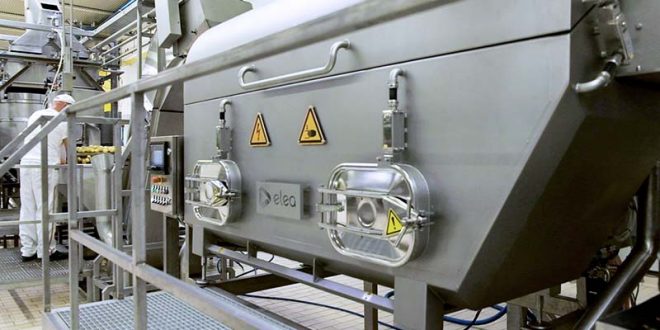
PEF is finding more and more use in potato and vegetable snacks processing. Process benefits are based on an effect termed electroporation with the cell membrane as its target. All cells are surrounded by a membrane, separating the cell from its surrounding. Applying an external voltage results in a charge accumulation at the membrane and an increase in the potential is induced. This triggers an electrical compression of the cell membrane and results in a pore formation.
by Robin Ostermeier, Stefan Töpfl, ELEA
Plant cells, e.g. potato cells, soften when subjected to the PEF treatment, as they lose their internal cell pressure (turgor). Due to controlled texture softening of tubers, cutting is improved, resulting in less starch loss, and therefore increasing product yield. Less feathering also decreases oil uptake during frying. Facilitated moisture release allows reduced frying time and temperature, which can lead to a production capacity increase and improved product appearance.
PEF Benefits in the Snack Industry
Whilst the cell membrane´s function is to control mass transport into and out of the cell, an electroporated membrane allows mass transport. The most visible effect after PEF application is water leakage out of the cells, reducing the turgor pressure and resulting in an overall softer, and easier to cut raw material. This allows an easier processing of fresh from the field crop or hard raw material such as sweet potato and helps to equilibrate naturally occurring variability within the raw material. As vegetable tissues after PEF cut better and show less breakage or rupture, the reduced turgor pressure allows more complicated cuts, such as deep ridge, waffle or lattice. The treatment results in a smoother cutting surface and less wear of the cutting blades, reducing the knife service intervals.
Furthermore, as fewer cells are mechanically damaged by cutting, the number of fines, debris and starch released into processing water is reduced during cutting. Less fines and broken particles translate into less product waste and increased yield. The lower extent of free starch on product surface also reduces the number of chips sticking together during frying. In addition to that, improved cutting causes less cracks in the product surface. Those are the pathways for oil entering during subsequent frying. Notably oil entering those capillaries will also be difficult to remove even with defatting equipment. Reduced mechanical tissue damage after PEF will lead to a reduction of fat uptake of 10 % for typical product and frying conditions. Due to the PEF-induced open cell structure water leaks out from the slices during processing. This increases the amount of free water on the chips surface and leads to the formation of a vapor layer on the surface of the chip during frying, reducing the amount of chips sticking together in the fryer. As a result, less rejects can be observed.
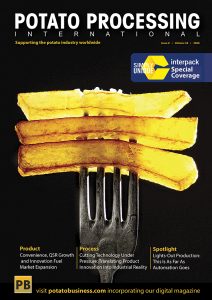
You can read the rest of this article in your complimentary e-copy of the May/June Issue of Potato Processing International magazine, which you can access by clicking here.