

Producing the Bespoke Systems Greenvale AP Requires
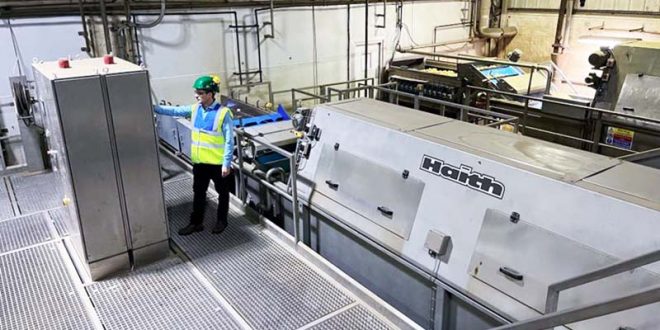
At its Floods Ferry location, one of the top suppliers of potatoes in the UK saw throughput almost double. Despite the rise, Greenvale AP maintained its incredibly high standards of quality and benefited from remarkably low operating expenses and water usage.
Two of Greenvale’s potato wash lines at Flood’s Ferry were beginning to show their age at the beginning of 2022, and with reliability starting to suffer, the board of directors and engineering team decided it was time to make a change. Adrian Dickson, the engineering manager at Greenvale, decided to consolidate suppliers since the adjacent line, which Haith installed in 2014, was functioning well in terms of volume, handling, washing, and operating expenses.
“We met with Duane Hill and the team at Haith, and we were very impressed with the features and enhancements of the latest wash equipment. As we have several Haith machines at our sites, we knew that Haith would be able to produce the bespoke systems we required. We always look at the market and decide which companies to work with based on their products, the quality of service, and the overall cost. Haith stood out in all areas,” Dickson declared.
The new lines are built on the tried-and-true Haith format but feature the most recent energy-saving technologies, little water usage, and advanced algorithms to ensure gentle handling.
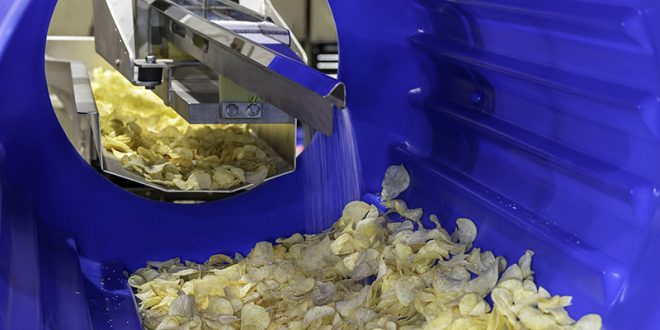
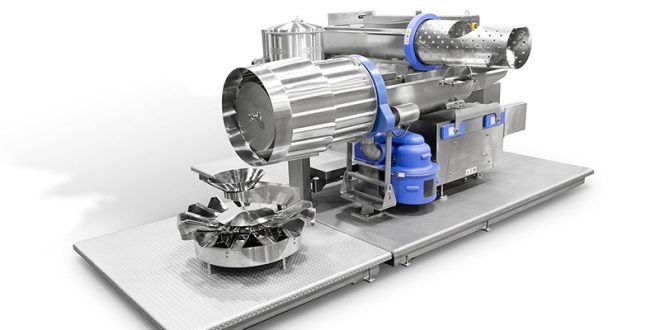
Potatoes are fed into Haith’s Rota-Tip Up-Eject, winner of the Queen’s Award for Enterprise then transferred onto a Supa-Flume stone separator before being cleaned in a partially submerged washer. The potatoes are then dried and graded for quality using the equipment already in place at Greenvale.
Food packers and processors who used conventional hydraulic box tipplers complained of oil leaks, high energy use, and instability, prompting Haith to develop the Rota-Tip Up-Eject. By swapping out hydraulic motors with entirely electric drives that consume less energy and don’t leak oil, Haith innovated the design. Additionally, Haith created a new rotating mechanism that is safer, more efficient, and able to handle bigger box volumes than earlier models.
The potatoes from Greenvale are tipped into a Haith Supa-Flume De-Stoner, which efficiently removes stone and clod from the crop while consuming the least amount of energy possible. Haith’s De-Stoner is incredibly effective and dependable thanks to its heavy-duty rubber stone discharge elevator, external bearings, and adjustable flow divider.
The fruit goes through a semi-submerged stainless steel barrel washer before being dried and sorted. The 4m long washer integrates Haith’s floating debris removal mechanism and has a highly effective displacement barrel. To make crop switching simple, Haith has given the option to pre-select water levels.
“As well as coping easily with the volume we specified, the new lines can greatly reduce the change over time when switching produce. This means we have reduced the stop-start cycling time we experienced with the previous lines and have greater control of line balancing, which is very important to us. We have also reduced our water usage and enjoy the ability for much faster change over time thanks to the way Haith has designed its machines,” Dickson added.
The Haith washer works in harmony with Greenvale’s renowned continuous loop wash water recycling system thanks to the company’s in-house software experts who completely controlled the new equipment and its operations. Additionally, the crop is shielded from any harm thanks to the enhanced feature, which boosts quality and consumer happiness.
The new lines for Greenvale also have a health and safety advantage. The line’s stainless steel fabrication and lack of hydraulics meet the highest levels of food safety regulations, and it is easier for Greenvale’s technical staff to access.
“Haith delivered a superb job. The team’s workmanship and professionalism were second to none! And when utility costs are skyrocketing, we’re delighted to report that new Haith lines use considerably less electricity than our previous lines, so as well as reducing damage, increasing quality and throughput, and lowering water consumption, we are also being responsible towards energy usage,” Dickson concluded.