

FAM STUMABO Targets Hidden Cost Of Embedded Stones In Potato Chips Processing
As potato processors face increasing variability in raw material quality and sourcing conditions, equipment suppliers are beginning to shift attention toward problems that traditionally remained hidden inside production lines. One such challenge is the operational impact of embedded stones reaching the slicing stage — an issue that FAM STUMABO says is becoming more frequent as processors work with potatoes grown under less favourable conditions. The company has introduced StoneExtractor, a development integrated into its centrifugal cutting technology and designed to improve the evacuation of small stones from the cutting head during potato chips production. Rather than focusing on upstream detection or simply strengthening components against impact, the approach addresses what the company describes as a critical point of failure: preventing stones from remaining inside the cutting system after initial contact.
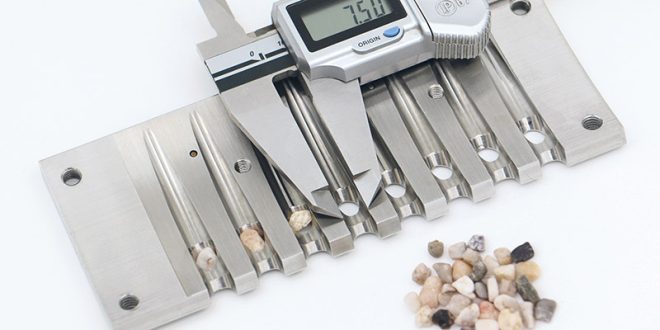
According to FAM STUMABO, foreign materials remain a persistent issue even in facilities using advanced washing, cleaning and optical sorting technologies. Embedded stones may remain concealed inside potatoes and pass through multiple control stages before reaching slicing equipment. Once inside the cutting head, small stones can trigger repeated impacts across several blades, creating cumulative wear, maintenance interventions and production interruptions. The challenge appears to be becoming more visible as potato processors adapt sourcing strategies. Weather variability, harvesting constraints and supply pressures are increasingly pushing processors toward potatoes produced in more difficult environments, including rockier soils, potentially increasing contamination risk at the processing stage. FAM STUMABO positions StoneExtractor as an upgrade rather than a standalone machine. The system introduces a redesigned cutting head segment geometry featuring deeper and wider grooves combined with optimised evacuation openings intended to guide stones out of the cutting zone immediately after impact. Existing equipment can be retrofitted with the new segment design without requiring major modifications to installed lines.
“The key advantage is that stones are removed at the point where the impact occurs. If they exit immediately, they cannot continue circulating and damaging other blades,” said Jörg Plumanns, Industry Manager Potato Chips at FAM STUMABO. The launch also expands the company’s broader “3S” framework for managing foreign material during slicing operations. According to FAM STUMABO, this combines Shielding through its StoneDefender technology, Sensing through Scalibur™ detection and process interruption capabilities, and Separation through the new StoneExtractor concept. The objective is to reduce cumulative damage, improve equipment reliability and maintain more stable production conditions. The company validated the concept under industrial conditions through collaboration with Kelly Ges.m.b.H., which FAM STUMABO identifies as Austria’s market leader in salty snacks and owner of brands including Kelly’s, Soletti, funny-frisch, Chio, ültje and Tyrrells. Explaining the background to the project, Plumanns said: “As part of our long-standing collaboration in the potato chips segment, Kelly approached us after experiencing recurring operational issues linked to embedded stones reaching the cutting stage, particularly when processing potatoes sourced from more challenging raw material conditions and rockier soils.” He added that the effects included “repeated blade damage, increased maintenance requirements, and reduced production stability”.
According to Kelly, implementation produced measurable operational improvements.
“Since implementing StoneExtractor, we’ve seen a noticeable reduction in blade wear and unplanned stops. It gives us much more predictable performance, especially when processing potatoes under more challenging raw material conditions,” said Andreas Steinauer, Line Lead at Kelly Ges.m.b.H.
For processors, the broader implication may extend beyond stone management itself. As raw material variability increases and sourcing flexibility becomes increasingly important, equipment resilience inside the cutting process may become a larger contributor to overall line stability than upstream sorting alone.