


Sustainable Bioplastic Straws Made from Potato Starch
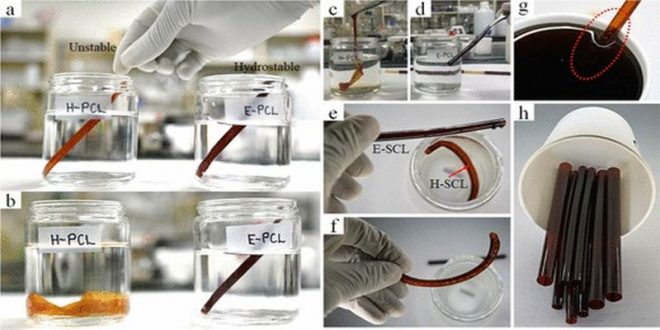
Finding a way to create a straw less harmful to the environment and that is not made out of oil and gas could be a real game-changer. In this respect, researchers in Korea have created a bioplastic alternative to plastic straws.
According to the team’s article published in ACS Omega, these new straws are stronger than plastic and more durable than paper.
Dickens O. Agumba, Duc Hoa Pham, and Jaehwan Kim created the straws by combining potato starch and lignin – a polymer found in the walls of plant cells – with polyvinyl alcohol to make a slurry. The slurry was then spread on a glass surface to dry before being rolled into a straw form with a Teflon rod and cured in an oven. The sheet was able to make the straw by sealing itself at the edges.
“The functionality of the straws and films surpassed paper and plastic straws, making them quintessential candidates for all-natural sustainable development,” the experts wrote in their paper abstract.
The crew tested the bioplastic straws and discovered that they could withstand hot (95 degrees Celsius) water for up to 24 hours without becoming brittle. The starch and traditional plastic straws were placed in soil and tree branches, respectively, to test the straws’ ability to biodegrade. After two months, the traditional plastic straws stayed unchanged, but the starch straws began to decompose.
The researchers contend that because the bioplastic was produced as a sheet, this technique enables straws to be produced in a variety of lengths and thicknesses for various drinking applications. The team asserts that lignin and potato starch are also less costly than the cellulose used to make other straws, which suggests that these straws may be less expensive than other plastic substitutes currently on the market.
“This green, economical, and scalable manufacturing process and the final products also demonstrate a closed-loop cycle, offering new avenues to engineer biobased, hydrostable, strong, UV shielding, and biodegradable materials from economical and sustainable biomass,” the experts concluded.