

The Judicial Review Case Filed by PEI PB Rejected by the Federal Court
The Government of Canada acknowledges the Federal Court’s ruling issued recently in response to a judicial review case filed by the Prince Edward Island Potato Board (PEI PB).
The PEI PB challenged several decisions made by the CFIA and the Minister of Agriculture and Agri-Food, including the Potato Wart Ministerial Order.
The government supports the Federal Court’s judgment to reject the Judicial Review application because the decisions under review were either moot or reasonable.
“The Government of Canada is committed to maintaining confidence in Canada’s plant health system, both domestically and abroad. Effective management of potato wart requires a concerted effort by everyone involved. As the regulator, it is the role of the CFIA to help contain, control, and prevent the spread of potato wart. The CFIA will continue to work with growers, industry, provinces, and trading partners to manage this disease while supporting industry activities,” according to a recent press release.
In its attempt to ease the export ban on seed potatoes due to a potato wart epidemic two years ago, the P.E.I. Potato Board encountered a barrier. The board argued in federal court that the prohibition was imposed outside of the Canadian Food Inspection Agency’s scope of jurisdiction. But in a 62-page ruling released on Thursday in Ottawa, Justice Richard F. Southcott of the Federal Court of Canada rejected the potato board’s plea for a judicial review.
There were some successes for the potato board. The court ruled that the CFIA lacks the authority to order suspensions of licenses and to give instructions to plant health inspectors and potato growers on the Island. The board informed the CBC that it would discuss the verdict with its legal team before deciding what to do next. The court determined that the CFIA’s ministerial directive was legitimate and that the agency was warranted in acting quickly to manage farm pests.
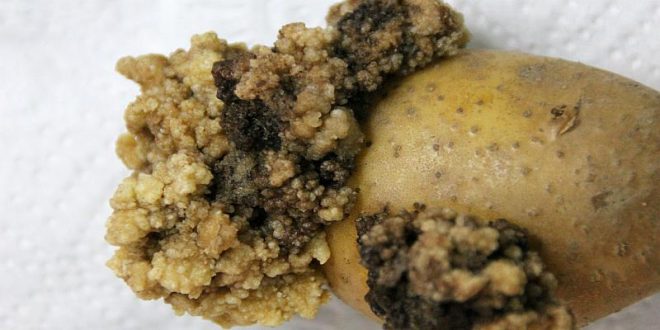
Potato wart is a tenacious fungus that, when present in the soil, can affect yield and tuber quality on farms. It can spread by the movement of soil, farm equipment, and potatoes from potato wart-infected fields.
As a pest regulated under the Plant Protection Act, its detection triggers measures to help contain and control the disease and prevent its spread. Potato wart poses no threat to human health.
According to Statistics Canada, potatoes are the fifth largest primary agriculture crop in Canada, contributing approximately USD1.5bn in farm cash receipts in 2021 and USD2.6bn in exports of potatoes and potato products in 2021/2022.
In late October 2021, the U.S. advised the CFIA that it would no longer accept seed potatoes from PEI and that failure to issue a notice of temporary suspension of export certification would result in the U.S. implementing a Federal Order that would prohibit their importation. The U.S. took the same position for table stock and processing potatoes.
The U.S. position led to two other CFIA decisions being challenged that informed inspectors that U.S. import requirements could no longer be met.
The CFIA may only certify export shipments that meet the import requirements of the jurisdiction receiving the product.
The judicial review occurred on March 23, 2023. An appeal may be launched up to 30 days after the decision is rendered.
U.S. imports of PEI potatoes for consumption resumed under certain conditions in April 2022, when APHIS introduced new requirements to reduce the risk of bringing in potato wart.
Currently, only field-grown seed potatoes from PEI may not be exported to the U.S. (as outlined in their Federal Order). The U.S. would need to change or repeal this federal order to resume importing seed potatoes from PEI.