

Four Late Blight Resistant GM Potato Varieties Under Confined Field Trials in Kenya
In Kenya, a group of foreign and national researchers working on a biotech potato project are optimistic about producing and delivering potato cultivars free of the destructive late blight disease.
In three Kenyan potato-growing locations – Muguga, Njabini, and Molo – the researchers are now conducting Confined Field Trials (CFTs) to assess the potential of four genetically modified biotech potato cultivars.
The data gathered from the CFTs will be assessed, according to Dr. Catherine Taracha, Kenya Agricultural and Livestock Research Organization’s (KALRO) Principal Investigator (PI) for the project, to determine which cultivars should move forward with National Performance Trials (NPTs).
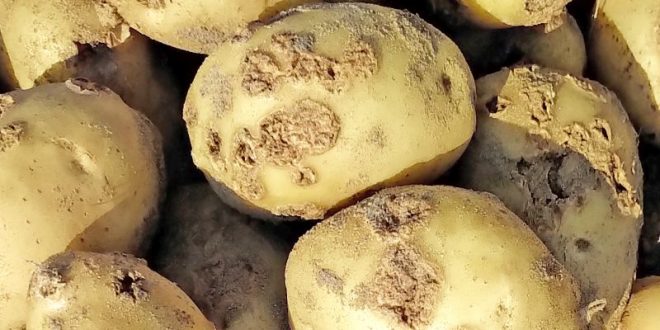
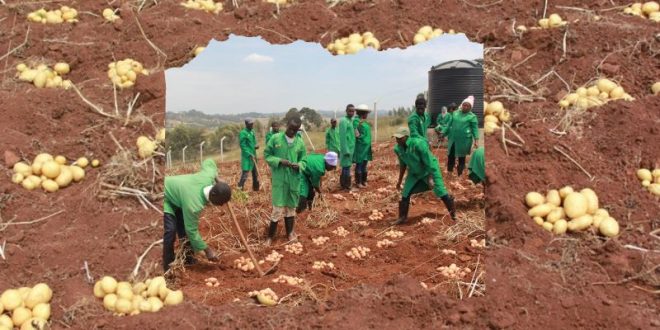
Dr. Catherine Taracha noted during crop harvesting at the Muguga CFT that the potato sector is plagued by many problems, including potato late blight, whose management remains a significant challenge, particularly among smallholder farmers in Kenya’s potato growing areas. To ensure a decent harvest, these farmers must spray pesticides up to 20 times to control late blight.
“Potato is a key food as well as a cash crop in the highlands of Kenya and is extensively produced by smallholder farmers. It is the second most significant food crop in Kenya after maize employing over 2.5m persons. It plays a key role in Kenyan food security and contributes to the alleviation of poverty,” Taracha said, according to AATF.
She added that about 30 to 60% of the potato crop is lost to the late blight yearly in Kenya.
“The inability of resource-strained farmers to control late blight, the optimum management of the disease in Kenya is likely to be achieved through the development of biotech varieties and this is currently being conducted in the country in a project termed the Global Biotech Potato Partnership,” she pointed out.
The National Biosafety Authority (NBA) approved the CFTs for the biotech potato for KALRO and other project partners to carry out trials on the late blight disease for three seasons to collect enough data to inform the next phase of the project under multi-location CFTs (ML-CFTs) in the country, according to Erick Korir, principal biosafety officer at the NBA.
He said he was happy with the biosafety procedures at the CFT site and that the tested biotech varieties had to stay at the CFT trial site until the NBA approved their release into the environment because biotech crops are genetically modified and field testing is done under controlled conditions.
If the biotech varieties are eventually made available to farmers through the research project run by the KALRO in Kenya as part of the Feed the Future Global Biotech Potato Partnership project, which aims to develop and release potato varieties resistant to the disease to address the persistent problem of late blight disease, then there is hope for the future of potato farming in the country.
The harvest from the second wave of ML-CFTs demonstrates that, in comparison to the conventional types that have been severely harmed by late blight, the biotech potatoes have a yield advantage and do not require a single chemical spray.
To increase harvests and farmers’ revenue from the sale of excess produce, Taracha stated that the project aims to provide late blight-resistant potato varieties to farmers in less than two years.
The Feed the Future Global Biotech Potato Partnership initiative is being carried out in Kenya, Nigeria, Bangladesh, and Indonesia, among other four nations. Under the direction of Michigan State University, it involves several partners throughout Africa, such as the International Potato Center (CIP), KALRO, and AATF.