

China’s Route From Reliance on Tubers to Reliance on Seeds
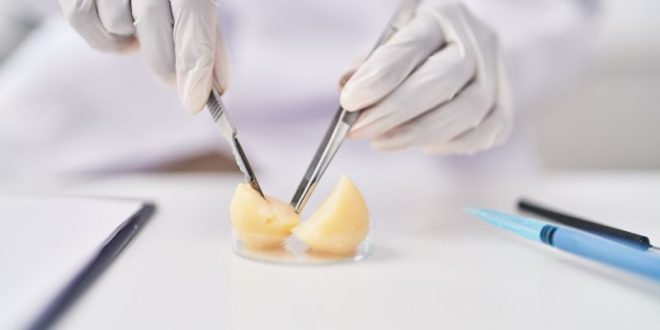
By utilizing evolutionary genomics to identify harmful mutations, Chinese researchers have made a significant advancement in hybrid potato breeding that could speed up the process and result in the creation of more and better potato varieties.
The discovery was made by a team of researchers from the Agricultural Genomics Institute at Shenzhen, which is part of the Chinese Academy of Agricultural Sciences, and it was published online in the most recent issue of the Cell academic journal.
According to Wu Yaoyao, a significant member of the study team, potato requires less water and may be grown in a variety of locations than other basic crops.
“But breeding a new potato variety takes too long. The potato variety used for McDonald’s fries was bred over 120 years ago,” Wu said.
The primary cause, according to Wu, is that potatoes are tetraploid, meaning they have four sets of genomes. Tetraploid plants also depend on asexual tuber reproduction, which has a lengthy breeding cycle and low reproduction efficiency.
The study team developed the “Ubiquitous Potato Project,” intending to change potato reproduction from asexual to sexual, and from reliance on tubers to reliance on seeds, as well as guiding potato breeding through genomics and synthetic biology.
Wu noted that to generate hybrid commercial lines with consistent qualities, high homozygous inbred lines must first be obtained by continual self-fertilization for scientists to consistently breed high-quality potato types.
However, a significant number of undetected harmful mutations accumulated during the potato’s lengthy history of asexual reproduction. These once “invisible” changes, such as decreased viability, sterility, decreased disease resistance, and decreased yield, become apparent after self-fertilization. The inbreeding depression phenomenon is a significant barrier to hybrid potato breeding.
“Overcoming the deleterious mutations is the most difficult task in this research,” Huang Sanwen, leader of the research team, said, cited by China Daily.
A total of 100 samples from the Solanaceae and Convolvulaceae families, with a combined evolutionary history of 1.2bn years, were gathered and their genomic information was compared. While sweet potatoes are members of the Convolvulaceae family, potatoes are Solanaceae.
“We observed that after 1.2bn years of evolution, if a gene or a piece of DNA of plants remains unchanged, it indicates that it is particularly important. We have identified the most conserved and unchanging sites in the genome. If these gene sites mutate, it is more likely to have adverse effects on potatoes, that is, deleterious mutations. We have explored the whole picture of deleterious mutations at the genome-wide level and created the first two-dimensional map of potato deleterious mutations. Therefore, we could search for and eliminate deleterious mutations more comprehensively and efficiently,” Huang mentioned.
Additionally, the study team created a novel whole-genome prediction model that incorporates information on harmful mutations. This model has the potential to increase by 25% to 45% the accuracy of predictions for variables including yield, plant height, and tuber shape. The model might help breeders make judgments about breeding early on, cutting down on costs and speeding up the process of breeding potatoes.
The study may boost potato breeding effectiveness by roughly 50% and lay the groundwork for variety development.