

Grants for US-made Fertilizers and Partnerships for Climate-smart Commodities
Recently, U.S. Department of Agriculture (USDA) Secretary Tom Vilsack revealed that the Biden-Harris Administration is making USD500m in grants available to raise the amount of fertilizer made in the United States to boost competition and counter price increases that have been imposed on American farmers as a result of the conflict in Ukraine.
The Biden-Harris Administration’s Fertilizer Production Expansion Program is part of a whole-of-government effort to promote competition in agricultural markets. The funds are being made available through the Commodity Credit Corporation.
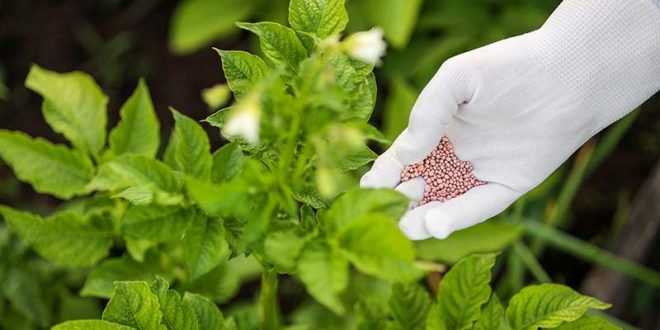
The grant money will be utilized to encourage American fertilizer production that is independent, creative, and sustainable to feed American farmers. Additionally, funds will increase fertilizer and nutrient substitute production and processing in the United States and its territories.
The program will assist independent fertilizer production that is not reliant on major fertilizer suppliers. The program’s constraints on market share are necessary to achieve its purpose of boosting competition.
Also, the program will support fertilizer production that is made in America. Products must be produced by companies operating in the U.S. or its territories, to create good-paying jobs at home, and reduce the reliance on potentially unstable, inconsistent foreign supplies.
Innovative fertilizer production will also be supported by the program. To launch the next generation of fertilizers and nutrient substitutes, techniques will advance fertilizer production processes and efficient-use technologies.
The program will aid in the sustainable manufacturing of fertilizers. Through the use of renewable energy sources, feedstocks, and formulations, goods should minimize the greenhouse gas emissions associated with transportation, manufacture, and consumption, encouraging increased fertilizer usage accuracy.
Last, but not least, the program will support fertilizer production that is Farmer-focused. Like other Commodity Credit Corporation investments, a driving factor is providing support and opportunities for U.S. agricultural commodity producers.
Eligible entities are for‐profit businesses and corporations, nonprofit entities, Tribes and Tribal organizations, producer‐owned cooperatives and corporations, certified benefit corporations, and state or local governments. Private entities must be independently owned and operated to apply.
The maximum award is USD100m. The minimum award is USD1m. The grant term is five years.
Fertilizer prices have more than doubled since last year due to many factors, including price hikes caused by the war in Ukraine, a limited supply of the relevant minerals, high energy costs, high global demand and agricultural commodity prices, reliance on fertilizer imports, and a lack of competition in the fertilizer industry.
On the same note, the Soil Health Institute (SHI) congratulates all recently announced USDA Partnerships for Climate-Smart Commodities Grant recipients. As an implementing partner across five selected projects, SHI will work alongside a wide variety of organizations to assist farmers, ranchers, and landowners on their journey toward improved soil health and climate resiliency.
Funding made available through this historic investment will enable SHI to advance the establishment of place-based Soil Health and Carbon Targets, provide farmers with measurable goals based on what is achievable for their soils and production systems, increase access to soil health training and availability of on-farm economic analyses, and leverage SHI work across projects to create communities of practice to support the successful adoption of regenerative soil health systems that contribute quantifiable economic and environmental benefits to agriculture and society.
SHI is a partner in the Climate-Smart Potatoes from the Pacific Northwest: Managing Soil Health for Climate-Smart Outcomes project. Led by Oregon State University, this project will build climate-smart markets and advance the adoption of climate-smart management systems in the Pacific Northwest states of Idaho, Washington, and Oregon where more than 62% of U.S. potatoes are grown and 15% of the domestic supply of seed potatoes are produced.