

HCIP210 Novel Potato Variety Has Been Created Through a Public-private Collaboration
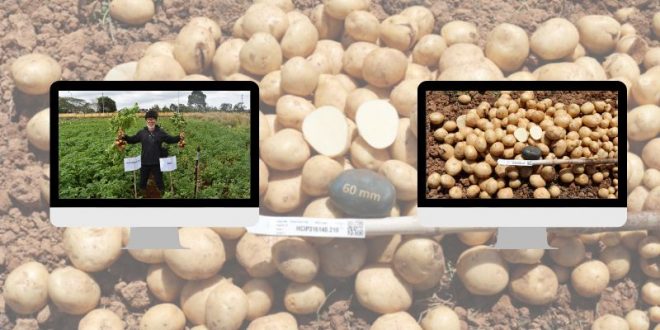
A new potato variety called HCIP210, created through public-private collaboration, has recently been introduced to Vietnam. This innovation is a part of the TAP5 project, which is named “The collaborative breeding of five tropically adapted potato varieties.”
This project combined the resources of the public and private sectors to speed up the breeding and selection processes for potatoes.
It typically takes ten to twelve years to generate a new variety of potato. But in just eight years, Vietnam has seen the birth of HCIP210, all thanks to the cooperative efforts of the TAP5 project team. Among its numerous advantages are its high production potential, flexibility in growing under different conditions, and strong resistance to late blight and viruses such as PVY and PVX. This potato variety has cream flesh. Furthermore, it has a dormant period of more than 120 days, which guarantees a consistent supply of superior ware potatoes well into the harvest season.
“The success of HCIP210 has been validated through large-scale on-farm registration trials conducted across six locations in Vietnam, including the Red River Delta and the Central Highlands. The results are nothing short of impressive, with HCIP210 outperforming commercial checks like Marabel and PO3 by recording up to 17% higher marketable tuber yields in certain regions. This variety is poised to significantly impact smallholder farmers in Vietnam, as its resistance to major biotic stresses could substantially reduce the need for chemical interventions,” according to a recent press release.
One of HCIP210’s most notable qualities is its capacity to adapt to highland environments, which makes it an excellent tool for off-season cultivation when more vulnerable types find it difficult to flourish. In times of shortage, this adaptability can be very helpful in lowering the reliance on potato imports from nearby nations.
“This groundbreaking endeavor kicked off in 2016 as a public-private partnership between the International Potato Center (CIP) and HZPC Holdings BV, a leading private potato breeding and seed trading company. With support from the Syngenta Foundation for Sustainable Agriculture (SFSA) and the United States Agency for International Development (USAID), the TAP5 program aims to enhance food security and family income for resource-poor farmers in Asia and Africa,” based on the CIP-HZPC common press document.
Through a combination of conventional and contemporary breeding methods, including shuttle breeding in various agroecologies and stringent molecular marker selection procedures, the TAP5 collaboration has successfully cracked the code to create early-maturing, climate-resilient potato cultivars appropriate for tropical regions. By combining the greatest genetics, this partnership skillfully combines the knowledge of the public and private sectors to produce potato types that are precisely tailored to the demands of Asia and Africa.
“CIP has a rich history of breeding tropically adapted potato varieties with early maturity and resistance to late blight and lowland tropics viruses. HZPC brings its genetic material to the table, offering resistance to late blight, PVY, PCN, common scab, and powdery scab in commercially accepted genetic backgrounds for both fresh and processing market segments,” the experts also mentioned.
CIP’s continued efforts to breed potatoes for tropical climates will be financed in part by the royalties received from HZPC’s commercial sales of TAP5 cultivars. This initiative also combines resistance features with commercially viable genetic backgrounds to address new issues in potato production, like bacterial wilt caused by Ralstonia solanacearum.
“[…] The promising clones identified in Vietnam will soon find their way to other target markets in Asia, including India, Bangladesh, Vietnam, Indonesia, and Africa, encompassing Tanzania, Kenya, and Ethiopia. […],” the press release reveals.