

HZPC is the First Foreign Breeder to ‘Really Invest’ in China
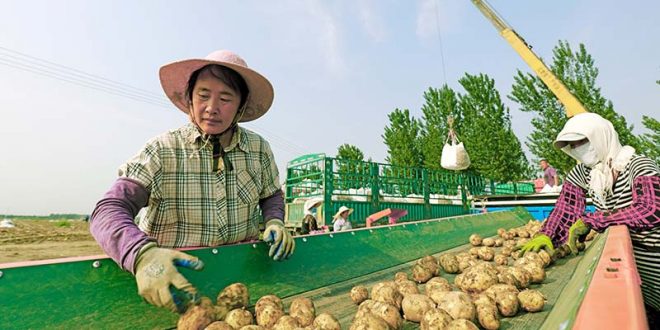
Although HZPC has been active in China since the beginning of this century, every year is unique, just like in the Netherlands.
For HZPC, Ton Frijters is active in China. He has just visited numerous farmers, personally participated in the corona measurements, and is already planning his year of 2023.
“HZPC is becoming a household name in China; it has built a good image. Mostly thanks to the quality of the varieties. Initially in the fries industry with the Innovator and later the Ivory Russet, but now also in the fresh market, with varieties such as Colomba and Lucinda. HZPC is the first foreign breeder to invest in the country. This started in 2007 when major fast-food chains applied their global standard (level of quality) in China as well. They are used to white-fleshed potatoes here, so demand is growing for the Ivory Russet as a replacement for the Russet Burbank because the Chinese growing season is too short for this old variety,” Frijters mentioned.
Ivory Russet had a rough start, but once the variety was produced in wider fields under specialized growth circumstances, its enhanced value quickly became obvious. Innovator and Ivory Russet are steadily displacing Shepody and Russet Burbank cultivars. Fast food outlets that serve fries today primarily employ Innovator and, to a lesser extent, Ivory Russet potatoes.
The fries industry in China is large and growing faster than the fries industries in the rest of the world. Nevertheless, it is still small compared to the Chinese fresh food market.
“To give you an idea: the fries industry is only 1% of the market. The rest is fresh,” he mentioned.
Potatoes are Traded on Large Wholesale Markets
“Here you can see that demand is shifting. Traders want to stand out and do so via appearance or by washing potatoes. So, it helps when the washed potatoes look good, like Lucinda and Colomba,” Ton Frijters explained.
They occasionally use cunning tactics to make the potatoes appear to be more recent. For instance, southern potatoes (winter crop), which may be identified by the southern red dirt adhering to the tubers, are well-liked in the spring. As a result, northern traders “wash” their older potatoes in red dirt to make them appear more appealing.
The government promotes potatoes as food. Potatoes yield the most nutrients per square meter of land and require less water than, say, wheat or rice.
“In China, however, potatoes are not seen as the basis for a meal, as in Europe. Chinese consider potatoes to be vegetables. To encourage the population to eat more potatoes, people hide them in dishes, such as in wok dishes with noodles or using potato flakes,” the HZPC representative said.
Ton explained that in China, the demand for more robust potato varieties will increase. For him, it is clear that the yields of HZPC varieties are higher than local varieties and that these varieties are resistant to various weather conditions.
“This is vital because there were challenging weather conditions in China last season. In northern growing areas, they experienced a long cold spell at the beginning of the year, fields were flooded by heavy rainfall in July and then beset by heavy night frosts at the end of August. All in all, this resulted in 20-30% lower yields,” he mentioned.
How things will pan out in China next year is not yet known.
“It will largely depend on the new frameworks set by the government. In October 2022, the ruling party sets the policy that will be turned into government policy next year. Once this is clear, we will know how to work with local partners and governments to re-establish new import lines so that we can provide Chinese growers with new top-quality disease-free plants, because seed potatoes cannot be imported. […] China is an exceptional country. A lot is going on. Developments follow one another at lightning speed. You have to see it to believe it,” he concluded.