Natural Resistance to Nematodes Transferred From the Litchi Tomato Into Potatoes
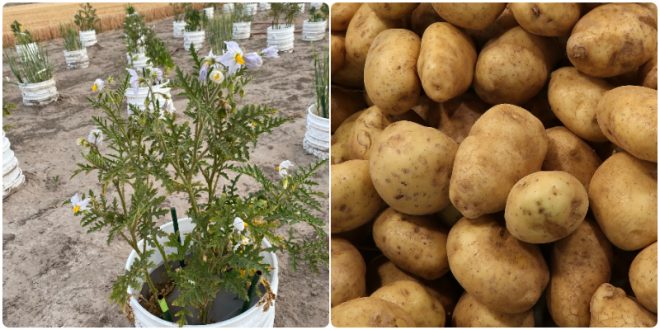
To create potatoes that are resistant to damaging nematodes, University of Idaho researchers are transferring genes from a plant in the nightshade family into potatoes. Natural resistance to numerous types of cyst and root-knot nematodes exists in the plant known as the litchi tomato.
“That’s an unusual trait to have such broad resistance,” Allan Caplan, associate professor in the university’s Department of Plant Sciences who is involved in the project mentioned.
Nematode cysts can live in fields for up to ten years and can be detected up to three feet beneath the surface of the soil.
Louise-Marie Dandurand, a nematologist and plant pathologist at the University of Idaho, has spent years researching various options for utilizing litchi tomato as a tool to prevent nematode-related production losses in potatoes.
To remove the pale cyst nematode (PCN), which is restricted to a limited area of eastern Idaho, litchi tomatoes have been planted as a “trap crop.” Litchi tomato encourages cysts to develop in the absence of a suitable host, starving them, when planted in areas with PCN infestations.
A postdoctoral researcher at Dandurand is working to find the compounds in litchi tomatoes that are harmful to or lethal to nematodes. The compounds that show promise might be improved and used as pesticides on crops.
To find the genes in the litchi tomato that are uniquely expressed when nematodes attack the plant, Caplan and Fangming Xiao, a professor in the Department of Plant Sciences, have been working on this project.
“We found at least 277 genes that got turned on. We think not all of them are necessary. We have to make educated guesses of which to try first, and it’s a matter of trial and error. We’re pretty certain some of these are going to have a big effect but we can’t say with certainty which ones they’re going to be,” Caplan said
They sent Joseph Kuhl, an associate professor in the Department of Plant Sciences, some of the genes they thought could be directly responsible for killing nematodes, and he utilized biotechnology to introduce them into a red-skinned potato variety called Desiree last summer. Desiree was picked because genetic modification makes it quite simple to change.
“If we see resistance in Desiree then we’ll make the effort to put it in russets,” Caplan said.
Last year, Xiao used litchi tomato genes to produce some biotech potatoes, and this summer, Caplan plans to add more litchi tomato genes to potatoes. They all develop, infect, and conduct all of their analyses inside sealed growth chambers.
Caplan thinks researchers may be able to adjust gene expression to protect potatoes from worms by laboratory techniques that aren’t regarded as genetic changes by first utilizing genetic engineering to discover the mechanism through which the litchi tomato defends itself.
Their study has been supported by several organizations, including the federal Plant Protection Act, the Northwest Potato Consortium, and the Idaho Potato Commission.