

Scientists Draw Roadmap to Defeating Late Blight Disease in Sub-Saharan Africa
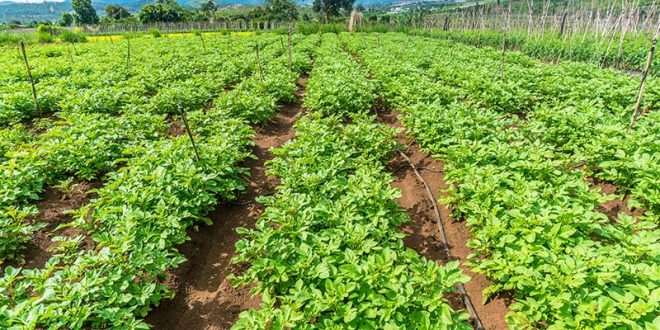
A recently published research paper from the Food Allergy Research and Resource Program, University of Nebraska, explains that it is virtually impossible to combine multiple R (resistance) genes from wild relatives by traditional breeding while keeping all the qualities of an elite potato variety. It took 45 years to transfer a single resistance R gene from Solanum bulbocastanum into a modern variety by conventional breeding.
According to the research, genetic transformation techniques provide a far more direct transfer mechanism into existing elite varieties lacking resistance to Late Blight Disease (LBD). The 3R potato was developed by the International Potato Center (CIP) by transferring three R genes chosen for their ability to recognize a broad spectrum of strains of P. infestans into farmers’ preferred varieties lacking resistance to LBD.
Confined field trials were conducted by the National Agriculture Research Organization (NARO) with CIP collaboration in Uganda since 2015 under full regulatory compliance by the National Biosafety Committee (NBC). Up to 15 transgenic events were tested from two varieties at the main potato research institute in Southwestern Uganda. Remarkably, all 3R potato transgenic events grew without being affected by LBD without fungicides whereas the non-transgenic varieties were devastated. Two transgenic events from the prominent Ugandan variety Victoria were grown in three locations and resulted in full control of the disease at all locations. The 3R Victoria transgenic events have been grown successfully without fungicides in more than a dozen field trials over the last five years.
3R potatoes have been developed and field-tested over the last decade in a wide diversity of environments in The Netherlands, Belgium, Ireland, United Kingdom, Sweden, U.S., Indonesia and Bangladesh. At all locations, the transgenic potatoes were grown without fungicides and yielded very well without any negative impact on the environment.
The scientists say that the stability of resistance to LBD is expected to be long lasting because additional resistance genes are available. The rotation of transgenic varieties with different sets of resistance genes will ensure long-term resistance to LBD.
Safety of 3R Victoria
The safety of many R genes has been demonstrated through the consumption of common natural potato varieties although not in a systematic way.
The three R genes in Victoria were selected from unmodified DNA fragments of wild Solanum bulbocastanum, and Solanum venturii, the same as those breeders could introduce by crossing. The genes encoding R proteins are inducible locally by the presence of the pathogen and the R proteins are expressed in potato tubers at concentrations below detectable levels. The R proteins are not toxins that directly kill pathogens. They cause a localized reaction in potato, causing the death of potato cells, depriving the pathogen of nutrients. Potential allergenicity and toxicity of these proteins were evaluated by comparing their amino acid sequences to known allergens and toxins using proven methodologies and results indicate no need for additional testing.
There is also no plausible risk hypothesis for environmental damage from the 3R Victoria event. Field studies of other transgenic potatoes expressing R proteins have not shown differences in arthropod abundance compared to conventional potato lines.
Farmers currently use fungicides to control LBD and partially resistant potato varieties with limited success. Fungicides, including organic certified copper-based fungicides, have some negative impacts on the environment, in particular, the soil eco-systems. The 3R Victoria potato offers advantages of no environmental disturbance while lowered energy and resource costs needed for LBD control.
In SSA, the cost of LBD is severe where farms are commonly only one quarter of a hectare and losses of 30-60% are common. “In Uganda, we estimated the benefits of adoption of the 3R Victoria by the small-farm holders to increase their profit by at least 40%. Also, the 3R potato is beneficial in terms of reduction in fungicide use and carbon emissions,” the researchers say.
The 3R Victoria potato is currently in field tests for regulatory approvals in SSA. Since the 3R potato was produced entirely by public research organizations, there is no need for payment of technology fees. There will, however, be a need to continue developing and maintaining high-quality potato varieties to maintain resistance to new strains of Phytophthora infestans.