

Special Biological Marker for Late Blight Early Detection in Potatoes
Researchers from different higher education institutions in Israel used a novel molecular sensor system that can penetrate the potato plant cells and detect potential late blight infection, according to a recent study that was published in The Plant Journal.
The researchers worked on creating a way to allow early detection of late blight infections because potatoes are essential to the world’s food security. Matanel Hipsch, a doctoral student, conducted the research under the direction of Dr. Shilo Rosenwasser, a senior lecturer and assistant professor at the Rehovot-based school.
“The development of advanced biotechnological tools for early plant disease detection can lead to a future research breakthrough in understanding the pathogenicity process and minimize agricultural damage,” Rosenwasser explained, according to a recent press release.
With the aid of a quick and safe external scan, the new method enables the early detection of numerous harmful diseases in the plant’s leaves. The scientists developed novel potato varieties using genetic engineering techniques that make unique proteins that are delivered to various parts of plant cells. The protein functions as a special biological marker throughout the process and can be delivered, for instance, to the chloroplasts in plant cells, which are responsible for photosynthesis.
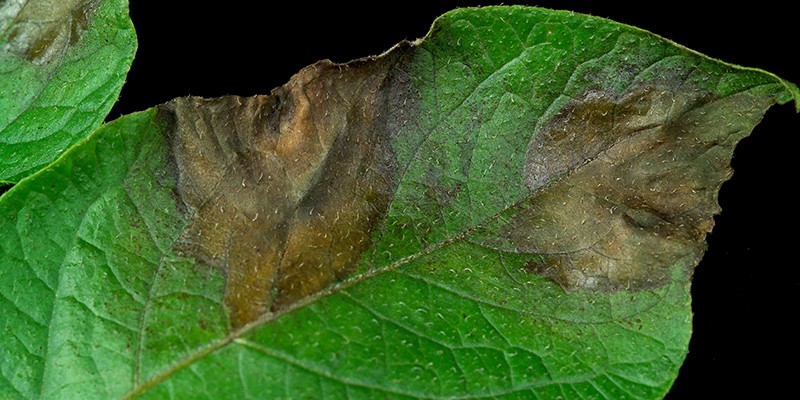
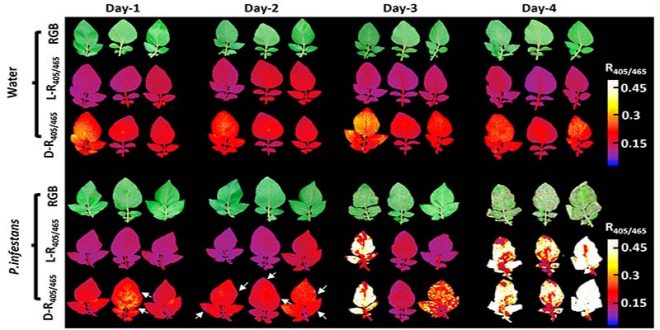
“Late blight caused by the oomycete Phytophthora infestans is a most devastating disease of potatoes (Solanum tuberosum). Its early detection is crucial for suppressing disease spread. Necrotic lesions are normally seen in leaves at 4 days post-inoculation (dpi) when colonized cells are dead, but early detection of the initial biotrophic growth stage, when the pathogen feeds on living cells, is challenging. Here, the biotrophic growth phase of P. infestans was detected by whole-plant redox imaging of potato plants expressing chloroplast-targeted reduction–oxidation sensitive green fluorescent protein (chl-roGFP2)”, the scientists wrote in their paper.
Based on their findings, the clear spots on potato leaves with a lower chl-roGFP2 oxidation state were detected as early as 2 dpi, before any visual symptoms were recorded.
“These spots were particularly evident during light-to-dark transitions and reflected the mislocalization of chl-roGFP2 outside the chloroplasts. Image analysis based on machine learning enabled systematic identification and quantification of spots and unbiased classification of infected and uninfected leaves in inoculated plants. Comparing redox with chlorophyll fluorescence imaging showed that infected leaf areas that exhibit mislocalized chl-roGFP2 also showed reduced non-photochemical quenching and enhanced quantum PSII yield (ΦPSII) compared with the surrounding leaf areas. The data suggest that mislocalization of chloroplast-targeted proteins is an efficient marker of late blight infection, and demonstrate how it can be utilized for non-destructive monitoring of the disease biotrophic stage using whole-plant redox imaging,” the experts added.
‘In Its Early Stages’
According to Hipsch, in its early stages, it’s difficult to identify the late blight because no external signs can be seen on the leaf.
“In our previous study, we saw that using molecular sensors within the biological systems of potatoes is particularly effective in identifying stress conditions even before plant damage has been caused,” he explained.
The scientists were able to gather spatial data at the level of the entire plant using sensitive cameras that can pick up the signals sent from the sensor. The images captured by the cameras, according to the researchers, assisted in tracking the physiological condition of the plant as late blight on potatoes developed.
According to the study’s conclusions, protein can be used as a biosensor to identify diseased leaf tissue even in its earliest, invisible phases. Additionally, as a result of these results, the researchers worked with Dr. David Helman from the Hebrew University Department of Soil and Water Sciences to create a Machine Learning-based algorithm that could analyze fluorescent images and tell healthy leaves apart from diseased ones.
“We have seen that plants infected with late blight cause the protein to emerge from the chloroplast and accumulate outside of it. This output caused a change in the fluorescent properties of the protein, which helped to identify the points of penetration of the pathogen into the leaf,” Hipsch said.
Late blight disease is responsible for an estimated USD6.5bn in annual global crop damage.