

The UW-Madison’s Potato ‘Maternity’ Focuses on Disease Resistance

Over the decades, UW-Madison’s potato breeding program has become one of the premier of its kind in the US, annually, breeding at the station creating 40,000 or 50,000 new tuber lines which are grown in greenhouses.
From that total, one quarter-size tuber is selected from each tiny potato plant. According to Jeffrey Endelman, a professor of horticulture at UW-Madison and the scientific lead on the school’s potato breeding program, 2021’s little greenhouse tubers will be planted outside, grow, then have their potato offspring inspected by Endelman next year.
“Every year, genetics is not changing. But the environment is changing. Each year, we learn something a little different about these environmental conditions. Maybe [the potato] has a certain liability that we didn’t see last year. It takes a couple of years of evaluating the same clone, as we say, to really, truly assess the commercial potential,” he said, cited by WXPR.
Keeping each potato variety disease-free and genetically pure is a top priority.
“Everything here is attention to detail, just with the sheer number of lines and making sure that they all stay intact as that variety,” station superintendent Becky Eddy added, quoted by the same radio station.
To that end, sanitization is key. Workers change clothes when transitioning from the field to the greenhouse. At every greenhouse door, staff steps through a green sterilization liquid. The station’s ultimate goal is to develop potato varieties that appeal to farmers.
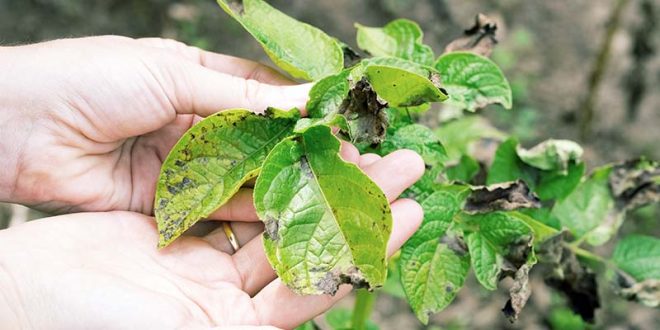
“What we’re trying to focus on over the next couple of years is to try to get resistances to certain diseases into our genetics,” Eddy mentioned.
Meticulous Selection
Developing commercially successful spud varieties brings back royalties to the program that can be used to fund further research. But finding a winning new breed is an extreme challenge. According to Endelman, about one of every 100,000 cross-bred potato varieties makes it to market.
“You have to be prepared to face failure all the time,” the scientist mentioned. “That’s true for any breeding, but the potato has a particularly difficult genetic system, so the odds of success are lower.”
If researchers are lucky, perhaps one of the 40,000 varieties created this year will make it to market. If one does, it will be given a name, maybe a name reflecting its origin. Oneida Gold and Hodag are two of the varieties recently released by the station. The UW program also has its sights set on its next Wisconsin find.
The UW-Madison’s Rhinelander Agricultural Research Station has 170 tillable acres. The land has been in potato production since the early 1900s. In the 1940s, commercial owner Lelah Starks gave it to the school and its relatively new potato breeding program.