

USD50m USDA Grant for OSU to Improve Soil Health and Lower the CO2 Footprint
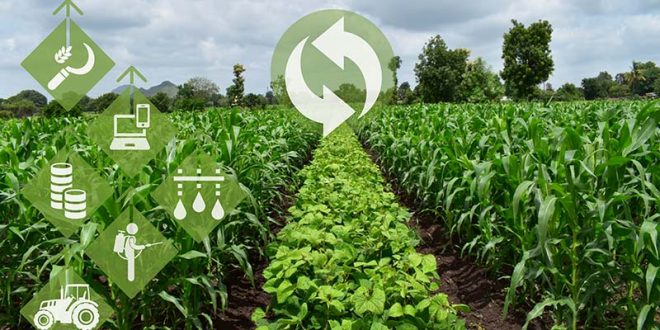
The U.S. Department of Agriculture (USDA) has given Oregon State University (OSU) a grant worth USD50m so that it can collaborate with farmers and Native American tribes on cropping techniques that can improve soil health and lessen the carbon footprint of the Pacific Northwest potato industry.
In the five-year study, which is sponsored by the USDA’s Partnerships for Climate-Smart Commodities program, OSU is working with the Universities of Idaho and Washington State, Tribal nations, commodities associations, and potato processing companies.
It is one of 70 projects that the USDA has funded with grant money totaling up to USD2.8bn to support American farmers, ranchers, and forest owners and to strengthen rural and agricultural communities in the United States by creating markets for what the USDA refers to as climate-smart commodities, which entails implementing environmentally friendly and climate resilient practices in food and agriculture.
“Oregon State University is privileged to take part in this once-in-a-lifetime opportunity to help the potato industry, Native American tribes, and other crop producers of all sizes and kinds are part of a national solution to climate challenges,” Jeffrey Steiner, project leader and associate director of the OSU Global Hemp Innovation Center said.
According to USDA figures, Oregon, Washington, and Idaho account for more than 62% of total U.S. potato production, which has an annual economic value of USD2.2bn. In the three-state area, potatoes are cultivated on around 202,300 hectares.
According to project officials, potato cultivation often employs techniques that significantly disturb the soil, especially during harvest, to prevent the buildup of organic matter and the release of greenhouse gases into the environment. The goal of this initiative is to support farmers who want to implement soil health improvement techniques that produce climate-smart results.
Oregon State will concentrate on how climate-smart practices and rotation crops are grown with potatoes, those produced in the three years between potato crop production years can mitigate the effects of the soil-disturbing practices, along with collaborators at universities and the Soil Health Institute, a nonprofit organization with headquarters in North Carolina. Cereal grains, alfalfa, corn, hemp, and onions are among the rotational crops. Reduced tillage seedings, the use of cover crops, and mulching leftovers are examples of climate-smart activities.
These improvements would improve soil health, conserve water, and produce climate-smart results, according to the researchers, who think that using the right combinations of these techniques could significantly increase soil organic matter, decrease soil nutrient losses, and improve soil water holding capacity.
On conventional, organic, and Native American grounds, the project team will evaluate how potatoes and rotation crops are now cultivated. The team will start the project by analyzing what is currently being done and measuring the soil conditions of the fields. They will then work with the farmers and Tribal leaders to identify rotation options and practices for building soil health that are suitable for their farms and land conditions.
By measuring soil data, the impacts of the alterations will be kept eye on. The data will be included in models to check that the strategies are effective. Farmers and Native American Tribes who participate will receive incentive payments to cover the upfront costs of implementing climate-smart measures and to lessen the risks associated with early-adoption expenditures.
“We want to provide potato and other farmers incentives for finding climate-smart practices that make sense for them and their farm conditions,” Steiner said.
The research will also assist in creating strategies for marketing and promoting crops like potatoes that are climate-smart. Some of the producers hope to market branded consumer goods that might offer participating farmers and processors a premium for climate-smart practices.