

US is at a “Low” Supply Risk Level for Potatoes

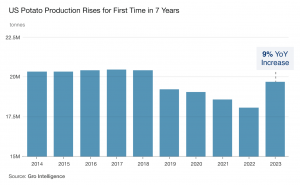
For the first time since 2017, the U.S. potato producers raised production of the nation’s most popular vegetable, growing close to 20m tons of the crop in 2023 – a 9% gain over the previous year, according to the latest Gro Intelligence analysis.
“The surfeit of spuds has ramped up supplies and eased prices for food manufacturers. Gro’s Commodities Tracker, which predicts the six-month supply risk for crops in the world’s major producing regions, shows the US is at a “Low” Supply Risk Level for potatoes, meaning the commodity is well supplied and the price is not expected to increase significantly,” the experts declared.
According to the Commodities Tracker display, average producer prices for potatoes have substantially decreased since July and are currently down more than 50% from a year ago. Discounts at supermarkets on frozen French fries, which were mostly nonexistent during the COVID outbreak, have returned as prices have dropped. Additionally, a significant fast-food restaurant is running a “Free Fries Friday” campaign through the end of the calendar year.
Behind the Abundance of Tubers
The US spud growers increased the amount of land planted for potatoes in Idaho, Colorado, and North Dakota in 2023, expanding the total area seeded by 3.3% from the previous year.
“Growing conditions also favored higher potato yields. In Idaho, which accounts for about one-third of total U.S. production, Gro Drought Index readings this season were down significantly from the previous year, and soil moisture levels rose, as seen in this display from Gro’s Climate Risk Navigator for Agriculture, weighted for Idaho’s potato growing areas,” the above-mentioned sources declared.
Consequently, Idaho’s potato production increased to 48.25 tons per hectare, up 5% from the previous year. Potato yields in Washington, the state that produces the most, increased by 6% to 68.98 tons per hectare.
The U.S. is one of the top five producers and exporters of potatoes in the world; the majority of the crop is used by food companies to make chips, french fries, dried potatoes, and other goods. The larger potato crop this year has also helped to boost US exports, which are up 6% so far this year over last. Taiwan, Japan, Mexico, and Canada are among the leading markets.
Although imports are up 10% so far this year, potato imports this year slowed from July to September, when they were down 20% from the same period last year. Potato imports into the United States reached a record high in 2022, with exports from Canada – the primary supplier – being 36% more than the previous five-year average. Less than 500,000 tonnes of potatoes are normally imported by the US each year.
The Gro Drought Index, which is displayed in this Climate Risk Navigator image, indicates that there will be a modest increase in potato production in Canada in 2023 despite increasing drought conditions in the major prairie-producing regions of Alberta and Manitoba.