


Project Management in Spud Processing Enables Manufacturers to Innovate
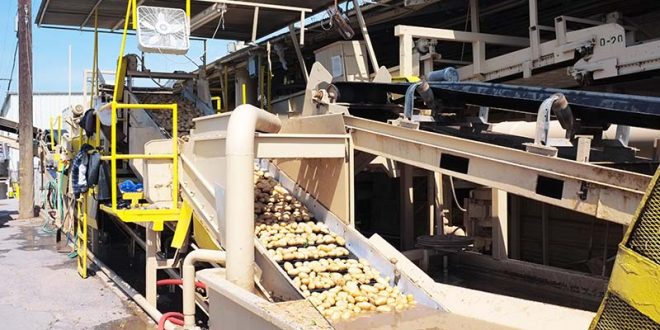
In the last few years, considering the market environment for processed potato products, clients’ resources have been pushed to the limit, in addition to the difficulty to bring in qualified workers. These setbacks resulted in customers looking for suppliers that could provide turnkey solutions along with efficient project management, to reduce the overall costs and the associated risks.
A complete spud processing system is more cost-efficient to design from the ground up, manufacture, install, and commission. This enables a potential beneficiary to diminish the projected investment of resources and obtain the desired results quickly.
The benefits of turnkey suppliers and sole components sourcing become obvious once a potato processing operation reaches a specific size and complexity. The ever-increasing competition in the sector, the quest to streamline production, and reduce production costs motivate spud processors to look into the sole sourcing of equipment from a single supplier as a way to ensure a trouble-free production and downtime predictability. Commonly, when several different manufacturing firms are working on the same project, miscommunication, disorganization, and high capability variance all contribute to frustratingly long production lead times.
Turnkey project suppliers offer affluence of knowledge together with their lines, providing flexibility for last-minute changes in production and nearly unlimited customization options. Given that all phases of production can be consolidated under one company, tasks are easier to coordinate, and streamlined communication processes prevent unnecessary misunderstandings. Usually, these systems integrate risk reduction, technical expertise, training, and project management as well as the actual equipment.
Although the benefits are obvious, there is still a widespread concern that by opting for a turnkey solution, manufacturers will provide an “off-the-shelf” product that may not necessarily meet specific needs. Even though many solutions were advertised as “plug and play” systems, each turnkey equipment will have undergone a serious amount of customization and fine-tuning before ending up on the factory floor, to ensure the final setup meets the exact requirements of the client.
In particular, as the potato processing industry is moving towards more automation – and it’s becoming a lot less about turning a key and a lot more about pressing the right buttons, experts say that ensuring the customers’ equipment is set up correctly is more important than ever.
With a turnkey solutions provider, a potential customer can be sure that every detail has been taken into account, no matter how small. From analyzing the clients’ business needs to designing the technology, to setting up its controls systems and training its staff, a turnkey solutions provider takes full responsibility for the entire project from start to finish.
Project Managers’ Key Roles in Analyzing the Customers’ Needs
Project management, in particular, plays a key role during the turnkey solution’s implementation. By analyzing the customers’ needs, their existing assets, and operational requirements, project managers can develop a tailored solution that is on time, on budget, and causes minimal disruption to the rest of the business.
You can read the rest of this article in your complimentary e-copy of Issue 4 of Potato Business Dossier 2021, which you can access by clicking here.