


Water Tech: The Potato Processing Industry is Rethinking Resource Consumption
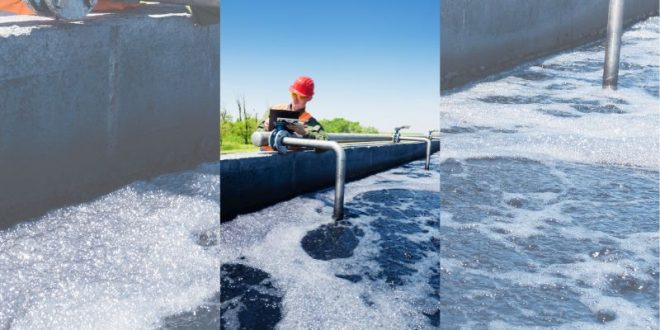
The potato processing business, one that has grown dramatically over the last 20 years, is a water-hungry industry, requiring an average of 17 liters of water for each kilogram of processed output.
With a global production of 376m tons annually, potatoes rank as the fourth most important non-cereal food crop. Consequently, this branch produces a significant amount of wastewater. Wastewater from potato processing is quite laden and hence challenging to treat using traditional techniques, particularly when little energy input is needed for environmental friendliness.
French fries, chips, hashbrowns, salads, and other potato treats are among the goods produced by the potato processing sector. Several processes in this chain include the use of water, such as washing, steam-peeling, chopping, boiling, and blanching. On average, 8 to 28 liters of water are used for every kilogram of processed potatoes. Furthermore, during processing, potato waste is produced, which could account for 15 – 40% of the original weight of the potato. It is estimated that the US potato industry alone generates about 1.3X10⁹ kg of waste each year.
Usually, potato processing wastewater is highly loaded with organic compounds. Its Chemical Oxygen Demand (the measure of the capacity of water to consume oxygen during the decomposition of organic matter in the water or COD) depends on the type of applied process and may vary from 6,000 to 30,000 mg/L.
“Such wastewater can cause serious environmental problems, as it contains high concentrations of biodegradable compounds such as starch 19 – 25 g/L, protein 2.8 – 4 g/L, and glucose 0.3 g/L, as well as inorganic salts containing significant concentrations of minerals (e.g., N 0.1–751 mg/L, P 128–361 mg/L, K 1613–2222 mg/L) and a pH in a wide range of 3.9 – 7.5,” ‘Application of Microbial Fuel Cell Technology in Potato Processing Industry’ report reveals.
Zero-energy Input Potato Processing Wastewater Treatment is Gaining Traction
The treatments with zero energy input are gaining traction and are anticipated to supplement or, in the best-case scenario, replace conventional methods used in industry. This is due to the combination of increasingly stringent water management regulations, technologies with lower energy consumption, and closed loops for processing water in the potato business industry.
Fruit and vegetable processing plants’ wastewater is mostly composed of carbohydrates, including starches, sugars, and pectin, along with vitamins and other cell wall constituents. Since around 75% of all organic stuff is soluble, it cannot be extracted by physical or mechanical methods. Thus, the best methods for treating wastewater are chemical and biological oxidations.
You can read the rest of this article in your complimentary e-copy of Issue 4 of Potato Business Dossier 2023, which you can access by clicking here.