

Potato Council Shares Insight on 50 Years of Potato Storage

As GB’s Sutton Bridge Crop Storage Research (SBCSR) celebrates 50 years, Potato Storage International will feature an interview on understanding storage evolution, with Adrian Cunnington.
To celebrate 50 years of research at this unique facility, a day dedicated to storage development, knowledge exchange and best practice will take place at SBCSR on 3 July 2014. This will be preceded by a ‘Summer Potato Feast’ industry dinner to be held in King’s Lynn on 2 July. A major focus has always been to ensure technology transfer of the latest research and development findings to improve the way businesses store their crops.
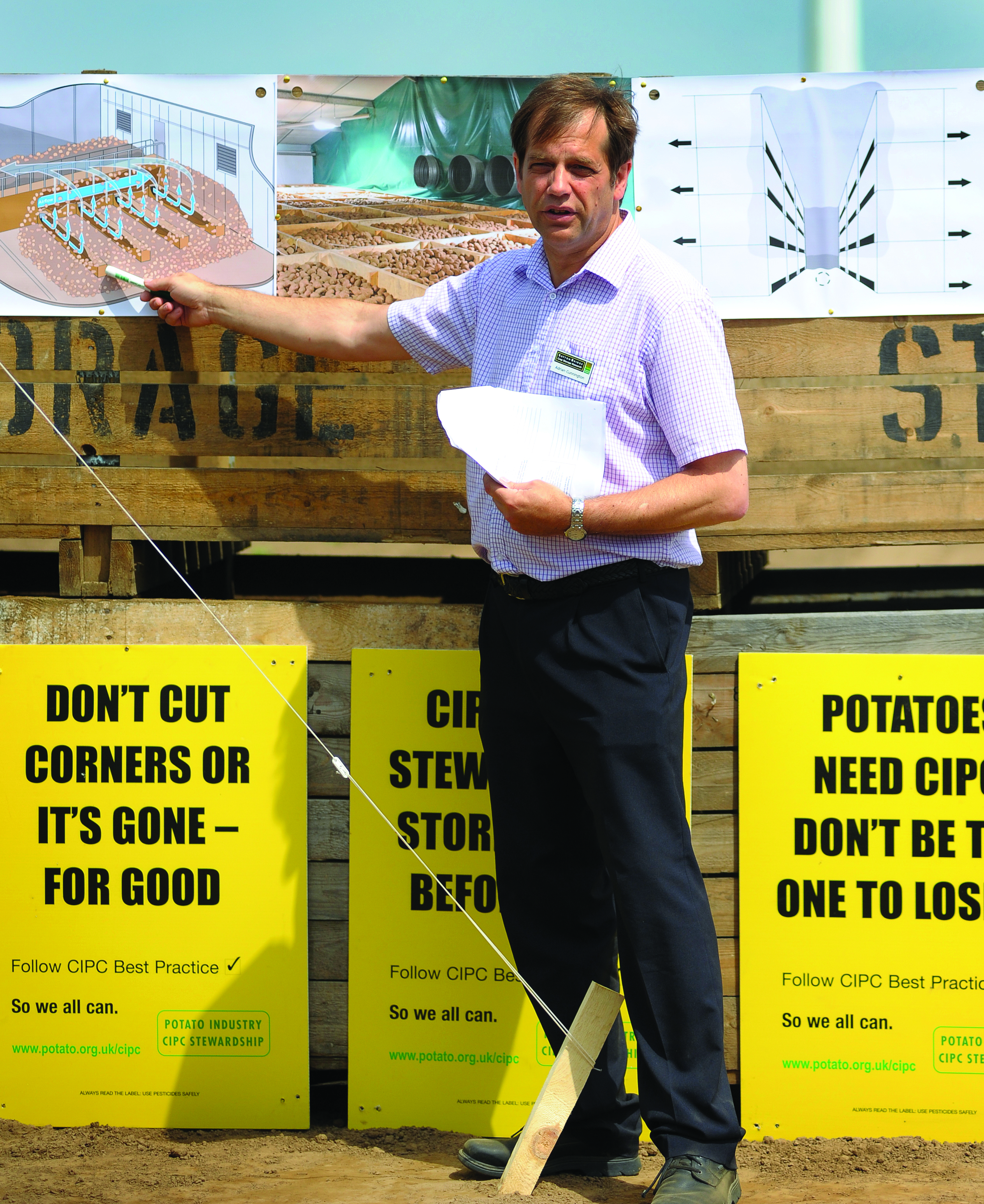 We talked to Potato Council’s Head of SBCSR, Adrian Cunnington, who has worked at the world leading storage facility for the last 30 years.
PSI: After 50 years in search for better potato storage solutions, where do you see most improvements?
Overall the key improvement has been to control the storage environment more closely to ensure minimal changes in quality. But some of the milestones include:
· Achieving 365 day a year supply of premium GB potatoes. This happened commercially around 25 years ago and previously there was a long gap until new season arrived.
· Although refrigeration has been around for the last 40 years, it has only successfully been used in commercial stores for the last 20 years.
· Gaining a detailed technical understanding of temp/CO2 interactions with CIPC. This has been a major factor to achieve processing consistency.
· Improved store hygiene discipline and disease management has been crucial to maintain the high health status of the GB seed industry.
· Regulating the storage environment to: focus on blemish control (Silver scurf and Black dot) for the fresh packing sector; to reduce disease population levels, such as dry rot, in all stores.
· Learning to use fewer chemicals.
· In the last decade the adoption of ethylene for the fresh sector has been a major benefit to sprout suppression.
· Our supply chain is far more robust today, traceabilty systems and crop segregation has been more prevalent over the last two decades.
· Technology, computer equipment and remote sensing equipment have all evolved. However one thing hasn’t changed: the need to make the environment uniform and the absolute need for daily monitoring and management. To regularly physically look at and smell the stored crop. But we are working on that, two current projects are looking at the commercial implications of using electronic noses for early disease and breakdown detection and machine vision for QC.
· We have a much better understanding of getting optimum stored quality and are not so tempted in filling stores for the sake of it – if it’s not suitable don’t do it.
PSI: Having this anniversary in mind, and 50 years in industry, what you consider as future trends we should inform our readers about?
I predict a further focus on quality; the need for increased awareness of gross margins and understanding the sustainability of systems; consolidation of the industry that might see further collaboration and sharing of management across grower supply groups; legislation change and pressure on the current chemical armoury.
Read the full interview in Potato Processing International/Potato Storage International – May/June issue, with details on the research facility’s evolution, challenges and opportunities for business development, the “Storage 2020 campaign”, and more.