

Cyclic Lipopeptides are Important to the Control of Potato Scab
A team of scientists from the John Innes Centre managed to isolate and test hundreds of strains of Pseudomonas bacteria from the soil of a commercial potato field, and then sequenced the genomes of 69 of these strains.
Following a complex comparison procedure of those genome strains shown to suppress potato scab activity with those that did not, the experts were able to identify a key mechanism in some of the strains that protected the potato crop from harmful disease-causing bacteria.
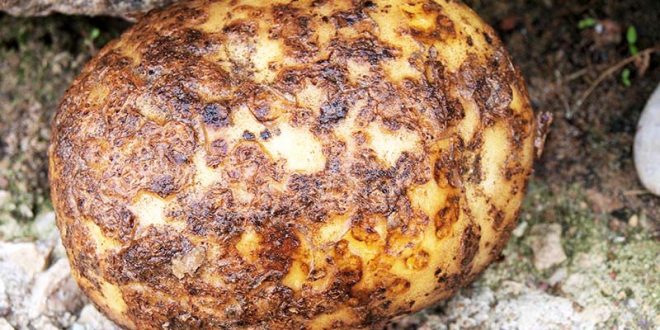
Subsequently, using a combination of chemistry, genetics, and plant infection experiments the examiners showed that the production of small molecules called cyclic lipopeptides is important to the control of potato scab, a bacterial disease that causes major losses in tuber yields. These small molecules have an antibacterial effect on the pathogenic bacteria that causes potato scab, and they help the protective Pseudomonas move around and colonize the plant roots.
The experiments also showed that irrigation causes substantial changes to the genetically diverse Pseudomonas population in the soil.
The next step for this innovative approach is to put the beneficial bacteria back into the same field in greater numbers or cocktails of mixed strains as a soil microbiome boosting treatment.
Potential methods to apply the microbiome boosters include applying the bacterial cocktails as seed coatings, as a spray, or via drip irrigation.
Figuring Out the Order of DNA Nucleotides
Genome sequencing is increasingly used in plant breeding, conservation, and identification, but not only.
Sequencing and assembling a complete plant genome has been seen as a daunting task, experts admit. The first plant genome of Arabidopsis thaliana (L.) Heynh. took 10 years to finish and cost approximately US100m.
On the other hand, the 2018 generation of DNA sequencing technologies made genome sequencing a reality even for small labs without generous funding sources. For instance, a high-quality A. thaliana genome can now be sequenced with a USB device on a regular laptop at a cost of under US1,000, with de novo assembly complete within a week.
This leap brings exciting opportunities to the botanical community. Whole genomes, paired with resequencing, can provide thousands of nuclear markers for phylogenetic and population-level studies, enabling genome-wide investigations into fundamental evolutionary and ecological questions. In addition, generating a pan-genome – capturing the genomic diversity of ecotypes, geographical isolates, and related species – will make comparative approaches and association studies possible to identify the genetic components of certain traits and adaptations.