

Novel Tools to Predict and Optimize Potato Plant Growth
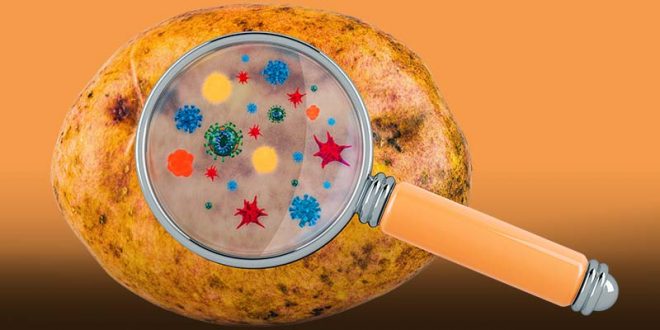
A EUR940.000 grant has been awarded to a project pioneering new tools to predict and optimize potato plant growth by mapping the microorganisms living on seed potatoes.
The project will be a collaboration between Utrecht University and commercial partners Agrifirm, Averis seeds, Bayer Cropscience, and HZPC, led by biologist Roeland Berendsen. The funding is provided by the Dutch Research Council (NWO) and the project’s private partners.
The new grant will enable Roeland Berendsen, a biologist at Utrecht University, and his colleagues to create new tools for precisely mapping the microbial population on potato tubers. This results in microbiome fingerprints, or a collection of microorganisms with distinct compositions. The microbiome fingerprints from seed potato tubers will then be linked to the vitality and health of the potato crop that grows from them.
“We will identify and isolate microbes that promote potato vitality and health. These microbes can then be used to develop sustainable potato cultivation systems that contain optimal microbiomes. Ultimately this results in crops that make better use of the natural microbial potential of soils and rely less on inputs of fertilizer and pesticides,” Dr. Roeland Berendsen, Plant-Microbe Interactions mentioned.
Spuds are one of the most important food crops in the world, but their production is heavily reliant on the use of fertilizers and pesticides. Optimization of the composition of beneficial microorganisms living on the plant is a promising strategy for reducing the use of these agrochemicals. These microorganisms promote potato plant growth and strength, resulting in a natural defense mechanism.