

USDA: P.E.I. Spud Seeds Can Introduce Potato Wart into U.S.
According to a recent report by the USDA titled “Assessing pathways of introduction for potato wart (Synchytrium endobioticum) from Canada into the United States,” seed potatoes from P.E.I. would spread the potato wart into regions where the crop is grown in the U.S. if no additional mitigation measures were taken.
The document reveals that an estimated 37% of U.S. seed potato imports from P.E.I. go to climatically suitable areas.
“When assessing the ability of S. endobioticum to follow each pathway, we considered its life cycle, host range, and climatic requirements for disease development. We did not consider any mitigation measures beyond minimal brushing and washing before export and visual inspection at ports of entry. Our conclusions are as follows: – the full extent of the potato wart infestation in PEI is still unknown but is likely to be larger than currently reported; – potatoes are commercially produced and grown in home gardens throughout the continental U.S.; – about half of the potato production areas in the contiguous U.S. and all potato production areas in Alaska have a suitable climate for potato wart establishment; – an estimated 37% of U.S. seed potato imports from PEI go to climatically suitable areas. Without additional mitigation measures, seed potatoes from PEI would introduce potato wart into U.S. potato production areas,” the document reveals.
Also, USDA experts say, potatoes for consumption may be a pathway for the introduction of potato wart into the U.S.
In this respect, there are some conditions to be fulfilled: – untreated potato waste from processing plants or stores is fed to livestock and fresh manure is then applied to fields or gardens where potatoes may be grown; – untreated potato waste is applied as fertilizer directly to fields or gardens where potatoes may be grown; – infected potatoes are discarded into homeowner compost piles and the compost is then used to grow potatoes; – infested soil is a pathway for the introduction of potato wart into the United States; introduction can occur via soil contaminating tubers and via non-sanitized equipment, tools, and vehicles; – in vitro plants or minitubers produced under greenhouse conditions and strict production guidelines are unlikely to be a pathway for potato wart; – infected potatoes for consumption that are commercially processed, discarded into landfills, composted per U.S. Composting Council guidelines, or used for fuel conversion are not pathways for the introduction.
48% of the Contiguous U.S. Has a Suitable Climate for Potato Wart
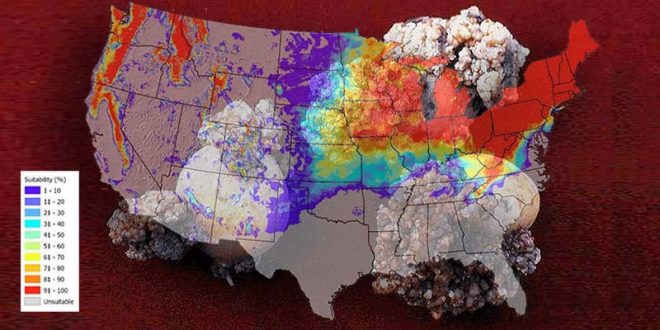
USDA’s researchers’ results indicates also that the Pacific Northwest, upper Midwest, Northeast, and parts of California are the most climatically suitable areas for potato wart establishment in the U.S.
“Other suitable areas include parts of Colorado, Montana, Wyoming, Utah, the Great Plains, and the eastern U.S. down to northern Georgia, but only at higher elevations. In Alaska, the southern coastal areas are most suitable for potato wart establishment, with areas further inland less suitable due to suboptimal precipitation,” they explained.
According to them, there are no climatically suitable areas for potato wart establishment in Puerto Rico and the U.S. Virgin Islands. However, limited areas with a suitable climate occur on Maui and the Big Island of Hawaii.
About 48% of the contiguous U.S. has a suitable climate for potato wart establishment. This area encompasses all the top seed and table stock potato-producing states. About 36% of Alaska is climatically suitable. All of Alaska’s potato-producing counties fall within this suitable area. While 5% of the area in the state of Hawaii is climatically suitable, only off-season growing of seed lots in the highly controlled certification process occurs in that state.
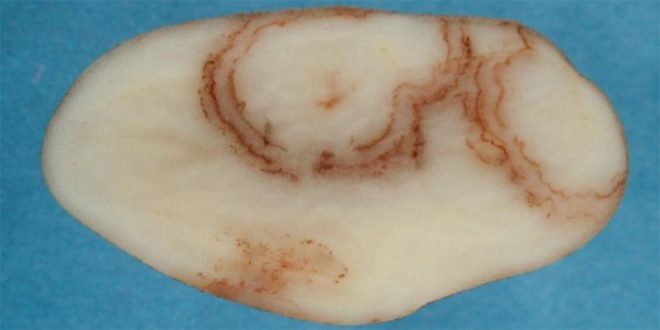
A living host is necessary for the reproduction of the soil-borne fungus pathogen Synchytrium endobioticum. It produces two different kinds of spores. The overwintering stage, which consists of resting spores, develops in response to environmental stress. The typical wart symptom is caused by resting spores that form deep within the potato tubers and are released into the soil when warts rot. The dormant spores germinate when specific climatic conditions are met, releasing mobile spores into the soil. These spores can move around and enter the eyes of the tuber in the potato plant by swimming through the water in the soil.
If the right circumstances are present, inoculum concentrations as low as one dormant spore in 25gr of soil can cause new infections. In the absence of a host, inoculum levels do not rise, but if the climate is right, resting spores can continue to be infectious for 40 or more years in the soil. However, in an unfavorable climate, the dormant spores lost their infectious properties within seven years, with the majority doing so by the third year. If the cellular contents of resting spores appear to be unharmed, they are regarded as viable, and if they can germinate and infect a host, they are regarded as infectious. A viable resting spore, however, might not be contagious in some circumstances, according to USDA experts.
Mobile spores of Synchytrium endobioticum spread 50mm or less in the soil while submerged in water. Infected soil that is attached to tubers, on farm equipment and machinery, in irrigation water runoff, or that is windblown from wart-infested fields can also spread potato wart. According to one study, earthworms that are feeding close to infected tubers may carry dormant spores up to 25cm as they pass through the soil.