

TuberSense Potato Crop Disease Monitoring System Has Entered Its Next Project Phase
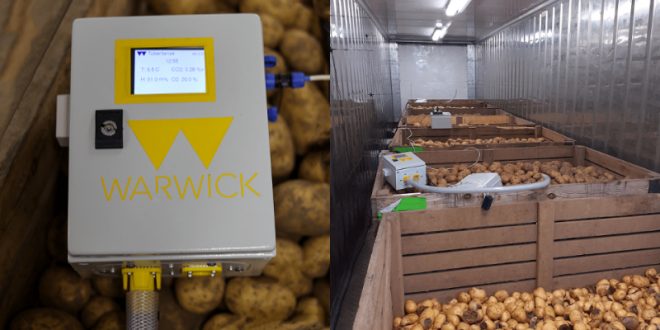
TuberSense, a root crop disease and defect monitoring system developed by creative agri-tech firm B-hive Innovations, has entered its next project phase, intending to revolutionize how technology can predict issues in tubers before the crop loses quality and value.
Dr. Barbara Correia, a Future Leaders Fellow, received funding from UK Research and Innovation (UKRI) in Summer 2021 and has since been completing the first phase of research, development, and testing with the project team, which includes potato producer Branston Ltd and research institutions.
Barbara’s original research to establish a link between potato diseases and volatile compounds generated by tubers was conducted in collaboration with UWE Bristol and the James Hutton Institute, while the University of Warwick has joined the initiative to create gas sensors to quantify the gases produced.
Following a series of first-phase trials, the R&D sensing system has now been created to identify crop diseases and flaws that can cripple potato supply chains, such as soft rot, dry rot, and black heart in potato tubers, using volatile biomarkers.
“The first phase of our research has provided us with tremendous novel insights into the range of diseases and defects that, unless detected early, can enormously compromise the overall quality of the crop that enters the supply chain. Through the first project phase, we have gained a great understanding of which diseases are most distinguishable through the use of gas sensing technologies. Conversely, we have also become more aware of which defects may not be detectable through such means, which already gets us thinking of other ways that we might detect those defects at an early stage,” Dr. Correia mentioned.
A Mix of Field Testing With Growers
Barbara and the crew have been performing studies utilizing a combination of field testing with growers and semi-controlled trials, including the utilization of industrial shipping containers, to ensure optimal testing conditions.
The research team started a 12-week Scaling the Edge initiative with UKRI to better understand the demand from growers. The majority of the growers, who had disease and defect issues with their crop in three-quarters of the cases, are eager for the development of a gas-detecting device for early identification.
The team is continuing to build the second iteration of the project, which will include a better gas sensor, to start testing with units by the end of the year. The first part of the project is now almost finished.
“Research and development combined with market research have made it clear that growers and packers of root crops require greater insights into disease and defect detection at the earliest point possible. While we have made some great breakthroughs during the first phase of the project, we have a lot of confidence from our ongoing analysis to trial a 2.0 iteration – that will extract even more insights into using volatile markers for gas sensing in stored crop.
“By undertaking detailed data analysis, we believe that we can detect some tuber diseases and defects more accurately through further refinements to the underlying technology, and we are working through making those changes. We are also exploring technology from other partners. This includes graphene-based sensors from Altered Carbon, who we have partnered with recently, alongside our bespoke sensor array to see how much we can push the limits of the sensitivity of the system. By the end of the project, we want to be in a position where our findings can inform the production of commercial detection systems for the industry,” she summed up.