

Increasing the Effectiveness of Potato Seed Production in Wisconsin
To increase the effectiveness of seed potato production at the Starks Early Generation Seed Potato Farm in Rhinelander, Wisconsin, the University of Wisconsin-Madison has a new partner.
For a fee, Wisconsin producers and other farmers can purchase early-generation seed potatoes from the farm, which is a component of the university’s Seed Potato Certification Program.
To take over the operations of planting, growing, and harvesting seed at the Starks Farm for the crop year 2023 and beyond, a group of four seed potato growers, including Eagle River Seed Farm, Baginski Farms, Schroeder Brothers Farms, and J.W. Mattek & Sons, joined forces this fall to form the Wisconsin Potato Coalition (WPC).
The private WPC will oversee the roughly 40.4 hectares of early-generation seed potatoes and several hundred acres of rotation crops under the new partnership. The Wisconsin potato industry’s need for clean, early-generation foundation seed is the focus of the WPC. The early stages of the seed potato production process, as well as overall testing and certification for the program, will continue to be carried out by university scientists and inspectors with the Wisconsin Seed Potato Certification Program. They will draw on their knowledge of plant pathogens, disease management, and diagnostics.
“This new public-private partnership capitalizes on the strengths of both partners,” Amanda Gevens, professor and extension specialist in the plant pathology department and the current administrative director of the certification program, said, cited by the College of Agricultural and Life Sciences University of Wisconsin-Madison.
According to Wisconsin Administrative Code, the university is required to certify seed potatoes according to their cleanliness and variety type under the terms of the DATCP and UW cooperative certification program. The initiative is managed by scientists from the Department of Plant Pathology in the College of Agricultural and Life Sciences, who also make sure that Wisconsin’s USD350m potato business has a sufficient supply of high-quality seed potatoes.
“Our coalition is excited to provide this service for the Wisconsin industry. Local potato farms are strongly positioned in the national potato industry when we have a clean, quality source for early-generation seed in Wisconsin,” Kevin Schleicher, director of WPC and director of sales for Wysocki Family of Companies, added.
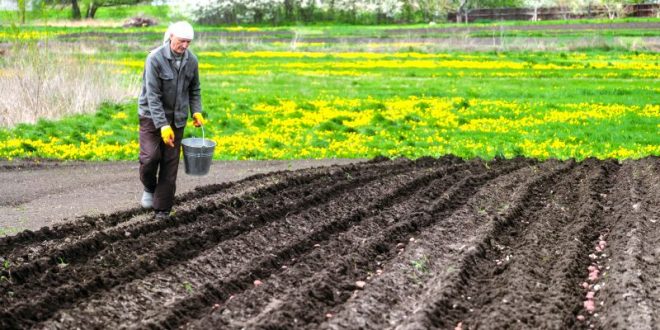
Each winter, the WPC will enter into contracts with seed potato buyers to decide how many and what kinds of seed potatoes to grow at Starks Farm. The certified seed potatoes will subsequently be planted, raised, harvested, and stored. At the farm, scientists and coalition members will continue to collaborate on research projects, and the university will continue to oversee the greenhouses’ on-site minituber production.
A 16.1 hectares spring-fed lake is surrounded by about 161.8 tillable hectares, part of the 404.6 hectares Starks Farm. Due to the rich sandy loam soil, lack of proximity to other potato farms, and exposure to cold winter temperatures that kill many plant infections, it is an ideal place to grow seed potatoes. Every year, potatoes are rotated throughout around 40.4 hectares.