

Late Potato Planting Can Result in Better Yields
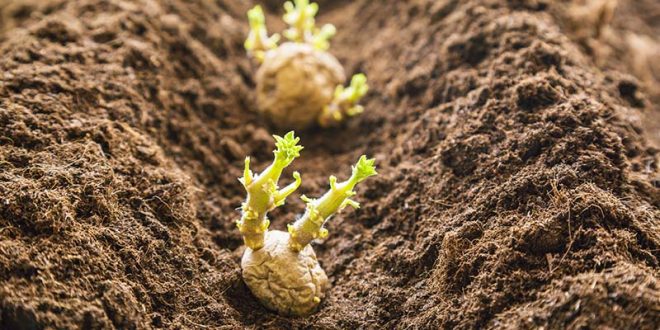
It has been one of the wettest winters on record, with many parts of the UK suffering damaging floods. In wet areas, planting may be many weeks away yet. Patience and risk mitigation can help prevent poor results come harvest – says Agriculture and Horticulture Development Board (AHDB)’s Graham Bannister. He underlines that it is important not to panic, since waiting a few days and planting in the right conditions is often better than ‘losing’ a couple of days’ growing time. The experts point out some of the key risks associated with the planting schedule and highlight some resources available to help manage them.
Avoid compaction
Planting in wet conditions can lead to yield losses larger than what could be experienced from delayed planting. Mark Stalham of the National Institute of Agricultural Botany (NIAB) said: “Serious yield loss due to late planting only really starts occurring after May 7 in England for a Group 3 determinacy variety. With longer daylight hours in Scotland, this may even be a few days later. The risks are associated with delayed emergence and the crop not reaching full cover by the longest day of the year.”
On the other hand, poor soil conditions can lead to compaction, so it is “highly likely that a 2 – 5t/ha yield loss may occur, if poor soil conditions lead to compaction,” Stalham said. Compaction often occurs when the soil surface is dry but it is wet below the surface.
Seed spacing
The shorter season and potential compaction issues means that tuber size is likely to be smaller, owing to lower yield. Seed spacing needs to be widened to achieve the optimum size specification.
Nitrogen requirement
Stalham reveals that a shorter season will typically reduce the Nitrogen requirement (by 20, 13 and 10kg/week depending on variety.
Getting nitrogen rates correctly this season will take on extra importance, due to the loss of popular desiccant diquat. Spotlight and/or Gozai straights or combinations, along with flailing, can give nearly as quick desiccation as diquat – but it is likely to be an easier job if the crop is approaching natural senescence. “Overdoing it on your N rates means you could be faced with a lush green canopy to tackle, while using an unfamiliar strategy,” Stalham concluded.