


“Shooting” Natural Alternatives to Herbicides in the Potato Fields
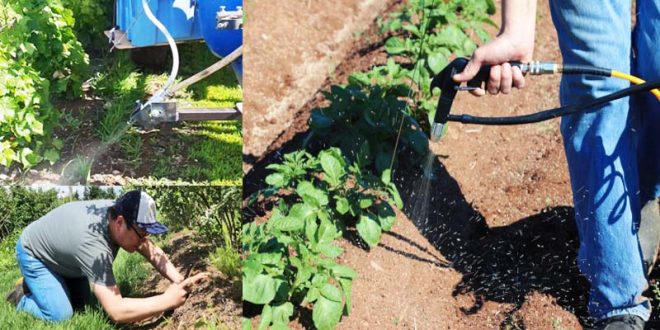
The “abrasive or projectile weed control”, which was initially created by University of Nebraska researchers for weeds damaging corn crops, is a unique substitute for pesticides that was just recently made public by a group of scientists.
The university study team “shot” natural substances including maize grit, corn gluten meal, and walnut shells at weeds using a sandblaster. They discovered that this substitute for herbicides was a successful method of eliminating or severely harming weeds in maize fields while lowering costs and environmental effects. But for other significant crops, it has mostly remained a theory for years.
As part of the Alternative Pest Management Solutions initiative to minimize the use of pesticides and herbicides, Agriculture and Agri-Food Canada (AAFC) experts from across Canada have linked together to establish the northern chapter of “weed hunters” to make this notion a reality.
New two-year research has just been started by AAFC scientists to demonstrate the notion of projectile weed management. They picked four high-value crops whose prevalent weeds have fewer alternatives for farmers to use pesticides and are getting more resistant to the ones that are readily accessible. In each crop, they are concentrating on the top five broadleaf weeds, often known as non-grass weeds.
Dr. Andrew McKenzie-Gopsill is tackling potato weeds at the Charlottetown Research and Development Centre on Prince Edward Island.
Each scientist has a commercial sandblaster that is connected to an air compressor and can fire walnut shells in fine and coarse sizes, as well as a mixture of the two, at a pace of 480 kilos per hectare, or a few grams per square meter. In tiny plots, some fields will be treated only with projectile materials, while others will be treated with projectiles and a lower concentration of herbicide to test if the same weed control can be accomplished without any herbicide.
The team wants to discover the optimum projectile material by 2024, including the optimal size and application rate, with a weed control of more than 80% without seriously harming crops or reducing yields. Additionally, the researchers are interested in determining if air-propelled abrasives may lower the overall herbicide application in blueberries, dry beans, vineyards, and potatoes.
The outcomes of this AAFC study may provide farmers with a quick, affordable, and straightforward way to manage weeds in their crops and lessen the negative environmental effects of pesticide use. It can take ten to fifteen years and hundreds of millions of dollars to develop and register a new herbicide in Canada.
The Canadian Pest Management Regulatory Agency would not need to register the air-propelled abrasives that AAFC is testing. New projectile materials might be made accessible to farmers without the registration requirement after just two years of small plot testing. Farmers may even make it themselves at a reduced cost because the ingredients are all-natural.