The ‘Future-proof Seed Potato Cultivation’ Project Brings Farmers Together

Growers learn the most from their peers. This has been demonstrated through the ‘Future-proof seed potato cultivation’ project, an endeavor to investigate forthcoming changes in potato production with a group of farmers.
“There are plenty of challenges: virus problems, decreasing use of plant protection products, and increasing costs are set against a backdrop of unrelenting quality requirements. To keep growers and other interested parties up to date with the group’s progress, there will be a regular feature in the Ruggespraak [consultation],” according to a recent HZPC release, with the company taking the role of project leader.
Aaldrik Venhuizen, the ‘Future-proof seed potato cultivation’ project supervisor, explained the structure and developments and talked about the first concrete project they are working on.
“When I retired [from Agrifirm, after 34 years], Frank van der Werff from HZPC called me. He talked about the changes coming their way, such as the fact that fewer and fewer crop protection products would be permitted, along with the requirement to sustain adequate quality. He also asked if I could also help HZPC with a new project,” Venhuizen said. He and Harm Steenhuis (Agronomist at HZPC) are the driving force behind this initiative.
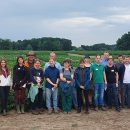
Cato Gaaikema is one of the 14 growers involved. He started 27 years ago, on the family’s arable farm together with his father in Oldehove, Groningen. Now he and his wife run an 86-hectare arable farm in Houwerzijl. They grow seed potatoes, among others.
“In 2020, we all sat down together for the first time. Fourteen growers. Young and old. Spread across all growing regions in the Netherlands. Not too big a group. And it was all about knowledge sharing, rather than education. Because growers learn best from other growers. People in large groups are sometimes reluctant to share mistakes. But this is often where you learn the most. That’s precisely why the group has to be manageable,” Gaaikema mentioned.
Viruses are a Major Issue for Most Potato Growers
According to Cato Gaaikema, potato viruses are transmitted by aphids. He added that, in the past, ‘the aphid was simply an aphid and it had to die’. But this method also had many drawbacks for the natural environment. And while growers from Groningen look to the south to see how they deal with aphid problems there, in Zeeuws-Vlaanderen they look to their south, i.e. to France.
During a group meeting at HZPC Research, Henri Stopin, R&D Manager of HZPC France, presented a project from France.
“Here, they use a straw covering. Laying straw between potato plants means the aphids can no longer ‘see’ them,” Stopin explained. Gaaikema replied: “And if it works out well in France, why shouldn’t we be able to do the same?”
Straw also adds structure to the soil. It means the soil retains moisture better.
Swiss researcher, Brice Dupies, the co-creator of the straw approach, was then invited to another meeting in Sneek. Thanks to his expertise, the threshold for Dutch growers to experiment has been significantly lowered.
The straw project has allowed farmers to demonstrate that new initiatives can get off the ground quickly. Yet they also want to convey to people that new developments do not simply happen by themselves.
“It wasn’t that long ago when plowing was the norm but, over the years, we have changed our minds about that. Nowadays, thanks to green manure, the land is more often green than brown in winter, and the no-till farming method is also gaining ground in farm operations. Finding a new balance is a journey of discovery and takes time. So, give the industry the benefit of the doubt and, above all, help where you can. After all, we only have seven crop years left before 2030. We have plenty of enthusiasm and you can sense a great deal of positive energy among the growers,” Gaaikema concluded.