

Tesco And Branston Deliver First Reduced-Emission Potatoes From Lincolnshire Concept Farm

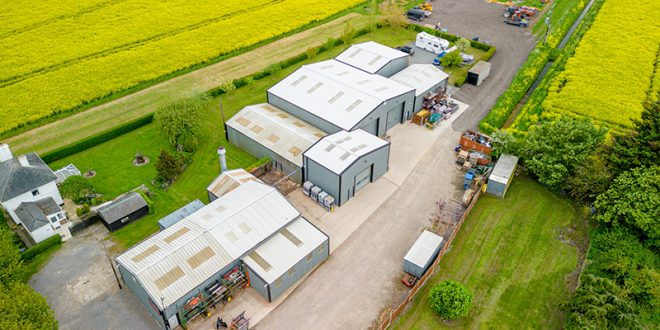
A low-carbon concept farm in Lincolnshire has delivered its first commercial potato crop to the UK retail market, marking what the partners describe as a milestone in efforts to decarbonise primary production.
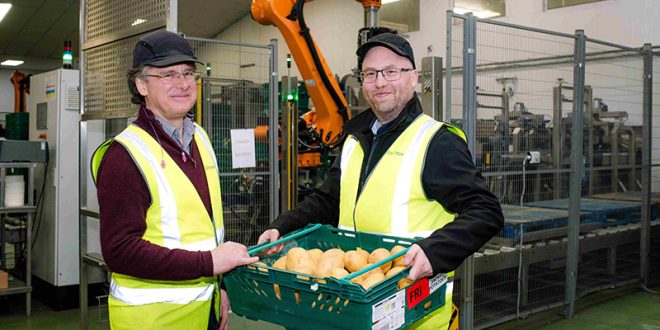
The initiative, established last year by Tesco and Branston, was designed to test production systems aimed at reducing carbon emissions in line with net-zero targets. The first harvest comprises 500 tonnes of the Georgina variety and is being marketed in Tesco stores in Finest British All-Rounder and Baking Potato packs from 23 February.
The crop was produced using a suite of lower-carbon practices. These included the application of circular economy fertilisers such as CCm, which incorporates CO₂ in its production process, minimum cultivation methods, and the use of hydrotreated vegetable oil (HVO) as a machinery fuel. According to the partners, the resulting crop achieved “more than 50% lower carbon emissions than conventional production averages”.
Andy Blair, Branston’s field technical manager overseeing operations at the concept farm, described the harvest as a turning point in translating sustainability ambitions into measurable outcomes.
“It’s a huge milestone to have achieved a lower average carbon footprint in the production of this crop of Georgina potatoes, compared to conventional production averages. The findings from this process will support the wider industry in edging forward towards national sustainability targets, which is exactly the outcome we’d hoped for,” he said.
Beyond the headline emissions figure, the project is intended to assess how carbon performance interacts with wider agronomic and rotational factors.
“The ambition of the low-carbon concept farm is not only to see how close we can get to a net-zero potato, but to understand the interactions between crops as you move from one to the next. We’ve got several crops in rotation, so now that we’ve made significant progress with the potatoes, we’re looking at the carbon impact, soil health, and biological impact of the process,” Blair added.
The concept farm operates as a controlled test platform, enabling the partners to evaluate which measures can be scaled across commercial supply chains without compromising yield or quality. For processors and packers, the implications extend beyond farm-level metrics to include scope 3 emissions reporting and retailer-driven sustainability benchmarks.
Future trials will expand the programme to include cover crops aimed at improving soil structure and nutrient retention, the use of R-Leaf fertiliser, and testing of a biomethane tractor. The intention is to build a clearer picture of the cumulative effect of multiple interventions across a full crop rotation.
Blair emphasised that collaboration will be essential to progress beyond incremental gains. “We’ve made huge progress, but to get to net zero, we’re eager to work with others to see what technology and innovations can be used to take us even further,” he said.
From the retail perspective, the concept farm is positioned as a risk-sharing mechanism within the supply chain. Natalie Smith, Head of Sustainable Agriculture and Fisheries at Tesco, said the farm aims to test a range of low-carbon approaches to reduce risk for other growers in the supply chain and inform future investment in agricultural innovation.
The project reflects a broader shift among UK retailers and suppliers to pilot decarbonisation strategies in defined production environments before wider rollout. For the potato sector, where energy use in fertiliser manufacture, field operations and storage remain significant contributors to emissions, the Lincolnshire trial provides an early commercial example of how integrated measures can be packaged and marketed to consumers without altering core product specifications.