


The Total Canadian Potato Storage Holdings Are Far Above the Five-year Average
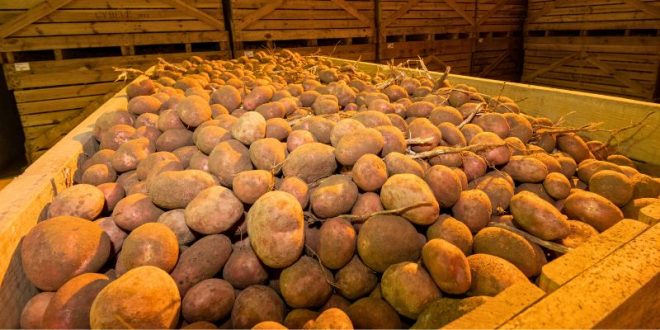
As of February 1, 2024, total Canadian potato storage holdings were 3.76m tons, far above the five-year average and up 8.2% from February 2023.
Quebec, P.E.I., and New Brunswick are all exhibiting lower stocks this month in comparison to the same month last year. It is significant to note that there have been reports of higher cull rates in the eastern provinces because of the rainy growing season and harvest, which have caused some storage challenges. The reduced stocks in these areas appear to be largely caused by good disappearance in January.
The provinces in the west appear to still have larger potato stock levels, primarily in the processing industry. Even though fresh inventories in Ontario, Alberta, and British Columbia were higher than national averages, fresh inventories are still down just over 5% overall. If the present pace of disappearance continues, the United Potato Growers of Canada (UPGC) experts anticipate very little carryover in this sector, but it’s still early in the season.
“We are still keeping an eye on the high levels of processing potatoes, with some growers concerned a part of the pile may end up in the Fresh sector, however to date there continues to be movement from west to east to use up the surplus and balance out shortages in some of the eastern provinces,” according to a recent UPGC report.
The seed sector also saw a decrease in overall stocks of 11,481 tons or 2.3%, with extra seed in Alberta, P.E.I., and Ontario offset by reduced inventories in Quebec, Manitoba, New Brunswick, and British Columbia.
Fewer Potatoes for the Fresh Sector
The fresh sector is showing 39,473 tons fewer potatoes in stock as of February 1, a decrease of 5.4% over the same month last year.
“It is important to note however that the current inventory level is still over the five-year average for the sector and the third largest February inventory apart from 2023 and 2022. The provinces showing increases by percentage do not have the actual volume of potatoes to offset the lower inventory levels in the main table potato-producing provinces, mainly in the east. Although there are concerns about some surplus potatoes in the processing sector ending up in the fresh pile, if the current pace of disappearance continues we would estimate inventories being cleaned up well before crop transition,” the same report reveals.
The Potato Processing Sector Shows Revival
The processing industry’s total inventory increased by 15.2% from February 2023 to that same month in 2023 – a difference of about 340,375 tons – with the bulk of that growth being kept in Alberta and Manitoba.
“We can still see the stock levels are down in the eastern provinces, an indication of decent movement but also impacted by higher cull rates and a smaller pile to start with. January disappearance in frozen processing did exceed the 2023 pace by 6,655 tons which is good news and will help to lessen the impact of carryover into new crop,” the UPGC experts added.
Contract talks for frozen processing potatoes have begun in numerous Canadian provinces and are well advanced in the US.
About chipping potatoes, the UPGC representatives observe that while the disappearance in Ontario has slowed, it has improved in Quebec, leaving Ontario with somewhat more than 240,000 sacks than in February 2023. That being said, it should be noted that the province’s output was initially up more than 5%.
The Potato Seed Sector is Still Above the Five-year Average
According to UPGC statistics, Canada’s seed potato inventory on February 1st was a little over 497,862 tons, a 2.2% decrease from the same month the previous year. The analysts did point out that the February inventory level in 2023 was the largest on record, and that the present amount of stock remains higher than the five-year average.
“Saskatchewan, Alberta, and BC all reported good seed crops this year, however, crops in New Brunswick and Quebec were not quite as good as originally anticipated. Higher virus levels in the east last year seem to be better so far based on initial test results, however, UPGC did hear of reports of some virus in regions not typically affected such as Saskatchewan and Alberta, however, we are waiting for official results to confirm. Disappearance in the seed sector has been slower than usual in December and January but according to producers they are expecting the pace to pick up in February,” they mentioned.
Disappearance for January 2024 Keeps the Pace With 2023
January 2023 saw a total disappearance in Canada that was nearly exactly on schedule, down only 304 tons or 0.5 percent from the previous year, with both the fresh and processed potato sectors performing similarly. However, the seed industry lagged significantly, declining by somewhat more than 41% from January 2023 to this point. The fresh sector reported a strong start to January but a slowdown towards the end of the month, despite numerous reports to the contrary. However, the overall pace of movement, as measured by disappearance levels, appears to be good and 1.8% higher than in January of the previous year, which is encouraging for low carryover into new crop.
“Although February is not typically a big shipping month, there seems to be more confidence in the fresh sector that shipment levels will stay on track, with St Patrick’s Day and an early Easter in March to bolster movement. We are keeping an eye on the impact of ‘Potato Lovers Month’ in Idaho in February and the russet promotions that may be happening in the U.S. that could dampen our exports this month. Although total disappearance in the processing sector was on track with the pace set in January of last year, there are still concerns about the large inventories that remain and that the pace of movement needs to be higher,” the UPGC experts concluded.