

Bio-renewable Polyethylene Packaging From Used Cooking Oil for Frozen Potato Products
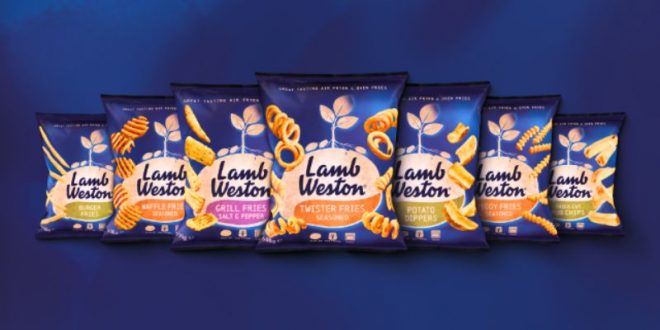
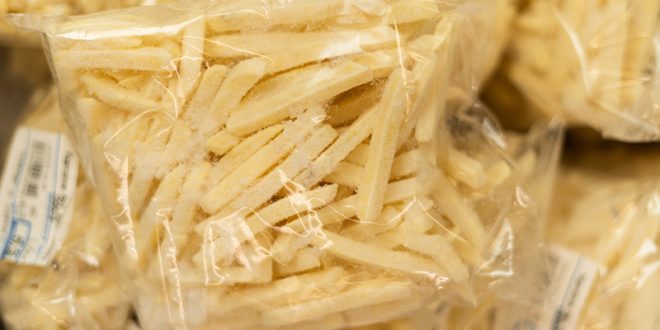
SABIC and Lamb Weston have partnered to develop a closed-loop method for producing sustainable packaging bags that are lightweight and have a thin coextrusion film structure. Utilizing bio-feedstock derived from leftover cooking oil (UCO), polymers make up at least 60% of the packaging.
The process begins with the collecting of UCO from Lamb Weston’s manufacturing, which is subsequently transformed into bio-feedstock to create SUPEER mLLDPE (metallocene linear low-density polyethylene) and SABIC HDPE (high-density polyethylene), certified bio-renewable polymers. As part of SABIC’s TRUCIRCLE portfolio, at least 60% of the final packaging is made of bio-renewable polymers based on UCO. These polymers are transformed into a multilayer PE film for Lamb Weston pre-fried frozen potato products by Oerlemans Plastics, a division of OPACKGROUP, a specialized manufacturer of flexible films and packaging.
“We are excited about the collaboration with Lamb Weston and Opack Group in this closed-loop project. Such a project demonstrates the concept of circularity as it better utilizes the UCO to produce circular polymers that are designed for recyclability and via a closed loop approach,” Khaled Al-Jalawi, Global Director of Circular Economy Business at SABIC, mentioned.
From the polymers to the film, the new Lamb Weston retail packaging is certified to contain at least 60% sustainable feedstock overall. Monitoring and tracing the renewable content in materials is consistent with the widely used International Sustainability & Carbon Certification (ISCC) PLUS mass balancing regime.
“Distributors, retailers, and consumers have become increasingly conscious of their environmental impact and show a growing preference for more sustainable packaging. We have anticipated this trend and developed an industry-leading bio-circular retail packaging solution for our pre-fried frozen potato products that provides a highly responsible value proposition. As part of our ambitious sustainability plans and innovations for the frozen potato category, the brand’s new European retail pack is made with 60% bio-circular plastic originating from Lamb Weston’s used cooking oil and is ISCC PLUS certified. By using SABIC’s bio-renewable polymer, and less and better packaging, this innovation reduces the carbon footprint of our retail bags by 30%, aligning with consumer expectations that FMCG brands are as environmentally friendly as possible. The success of this project also meets our goals to halve our food waste, cut our overall product carbon footprint by 25%, and move to more circular production by 2030,” Sebastiaan Besems, VP Commercial EMEA from Lamb Weston, commented.
A 30% lower carbon footprint than the previous bags for this application is made possible by the combination of 20% thinner film (the resulting bags weigh just 10 g on average per unit) and bio-renewable SABIC PE. The SUPEER mLLDPE resin provides superior bag sealing, while the SABIC HDPE resin in the film structure offers exceptional strength and flexibility. Both materials meet the food-contact regulations set forth by the U.S. Federal Drug & Food Administration (FDA) and the European Food Safety Authority (EFSA).
“The project solidifies the committed efforts we have undertaken with SABIC to promote low carbon and renewable products within our industry and represents a significant advancement. It allows us to offer our customers high-quality flexible film products made with renewable material from used cooking oil,” Laura Hanegraaf, Sales Manager at Oerlemans Plastics (subsidiary OPACKGROUP), declared.
The first frozen potato products packaged in bags made using Oerlemans’ multi-layer film utilizing certified renewable PE polymers from SABIC were introduced by Lamb Weston in the UK and the Netherlands in September after a rigorous testing and review process.