


Lights-Out Production: This Is As Far As Automation Goes
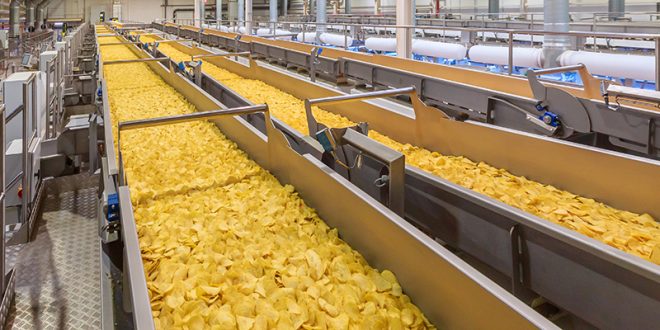
“Lights-out production” is one of the most compelling phrases in industrial food manufacturing because it suggests a factory capable of sustaining output with little or no direct human intervention. In potato processing, the concept has obvious appeal. A plant that can run with fewer routine manual inputs promises tighter cost control, lower labour exposure, and more consistent production. Yet the phrase often travels further than the operating reality.
Potato processing is not a single machine but an interconnected system. Receiving, washing, peeling, cutting, blanching, frying, freezing, seasoning, packaging, palletizing, utilities, wastewater treatment, and storage all depend on each other. Under stable conditions, a modern line can operate with surprisingly limited intervention. The difficulty begins when one part of the process moves off target. In a tightly coupled plant, a minor deviation can spread quickly across the operation. That is why lights-out production is better understood as a test of where automation remains stable, and where it does not.
What Large Processor Investments Actually Prove
The strongest processor examples do not support the idea of fully unmanned potato factories. They support a narrower conclusion: major processors are building more automated, more efficient, and more data-intensive plants, but they are still building plants that depend on people.
Lamb Weston’s Kruiningen expansion is one of the clearest examples. In 2021, the company said the new facility would be “the most automated plant” in its Lamb Weston/Meijer network and stated that it was designed to process potatoes with a minimum amount of water and energy. When the plant was officially opened in November 2024, Lamb Weston said the investment added 195 million kilos of annual production capacity. The same announcement also stated that the Kruiningen site employs approximately 650 people, including 120 new hires connected to the new plant. That combination is revealing. Even in one of the most advanced potato-processing investments publicly described by a major processor, automation has not removed the workforce. It has changed the structure of work.
Simplot’s published material points in the same direction. The company says its Idaho plant in Caldwell opened in 2014 as a state-of-the-art potato processing facility that consolidated three western U.S. plants into one site, with more than 500 people working at the campus. Simplot also says the Caldwell plant was designed to maximize energy and water-use efficiency, and separately notes that the plant can reclaim up to 1.7 million gallons of water a day for reuse in production-related functions. In Manitoba, Simplot said the 400,000-square-foot expansion of its Portage la Prairie facility more than doubled processing capacity and established the site as one of the most energy-efficient facilities of its kind. Again, the message is not labour elimination. It is higher-capital, higher-efficiency processing in which stable operation becomes more valuable and disruptions become less expensive.
Aviko’s own wording supports the same interpretation. On its site, the company says it takes about an hour and a half to convert a potato into fresh, dried, or frozen products, running “24 hours a day, 7 days a week” in a “sophisticated and automated process.” That is a strong description of continuous automated production. It is not evidence of an unmanned factory. It is evidence of a highly organized process environment operating continuously with structured oversight.
Automation Advances Fastest In Stable Zones
The practical lesson from these examples is that low-intervention operation becomes most plausible where process conditions are most repeatable. End-of-line packaging, pallet handling, cold-store interfaces, and parts of freezing and finished-product transport are more suited to low-touch operation because the process is standardized and the variability is lower. The further upstream a processor goes, the more difficult it becomes to remove human judgment.
Utilities and environmental systems are an important part of that picture. In Endress+Hauser’s published case study on Wernsing’s Addrup-Essen operation, the supplier says wastewater is monitored, cleaned, and filtered with measurement and automation technology, and that 20 percent can be reused for cleaning and processing steps. That is a useful example, but it should be read carefully: it is a supplier case study describing an important point. A potato plant cannot realistically approach low-intervention operation if water treatment, reuse, and discharge control still depend heavily on manual oversight. Utilities automation matters because it stabilizes the plant beyond the food line itself.
The same caution applies to digital integration case studies. In Crosser’s published case study on Clarebout, the supplier describes Clarebout’s factories as facilities that “never switch off” and says the processor wanted to capture data such as machine health, ingredient use, and process timing and connect it to MES and ERP systems without interrupting production. That material is useful as evidence that plant-wide data visibility is becoming part of automation strategy, and it supports a narrower conclusion: processors pursuing high automation need plant-wide data orchestration, not only machine-level control.
Where Automation Still Reaches Its Limit
The reason potato processing cannot honestly be described as lights-out at plant level is not that the equipment is unsophisticated. It is that the system still depends on exception handling under variable biological and operational conditions.
Potatoes are not uniform industrial inputs. Variability in size, solids, sugar content, moisture, defects, and field contamination continues to affect line behaviour. Sorting, inspection, vision systems, and control software reduce exposure to that variability, but they do not eliminate it. The same applies to hygiene and maintenance. A modern plant can automate large parts of cleaning, monitoring, and control, but food safety still depends on verification, inspection, corrective action, and disciplined execution. A highly automated line may reduce manual handling while also increasing dependence on sensors, software, and fault-free synchronization across connected subsystems.
That is why the real automation limit in potato processing is not steady-state running. It is recovery.
The Real Test Is Recovery
Many lines can run impressively when raw material quality is stable and all systems are synchronized. That is not the hard part. The harder question is what happens when the process is disturbed: when a raw material shift affects line balance, when a sensor drifts, when fouling interferes with control, when packaging backs up, or when an upstream slowdown begins to destabilize downstream throughput.
A line that performs well only under ideal conditions is not especially close to lights-out production. A line that can detect disturbance early, isolate it, prevent cascade failure, and restore stable operation quickly is closer. This is precisely where human expertise remains central. Exception handling in a live potato plant often requires interpretation and prioritization, not just automatic correction.
Read the rest of this feature in the free e-copy of the March/April Issue of Potato Processing International, which can be accessed by clicking here.