



AI-Based Vision Inspection Targets Contaminants And Misgrading In Potato Processing
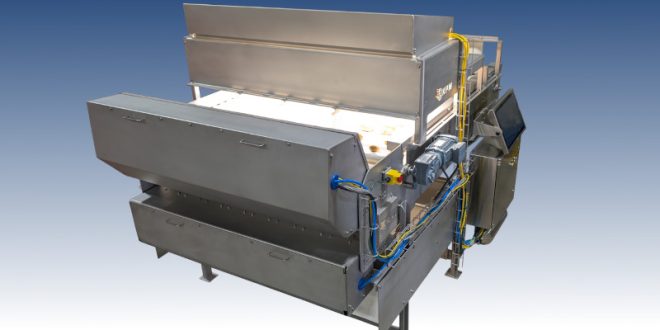
Smart Vision Works, a KPM Analytics brand, has introduced an updated version of its SiftAI® Smart Table®, positioning the AI-based vision inspection system as a tool to help potato processors address persistent profitability challenges linked to foreign object contamination, misgrading and rising labour costs.
The newly designed system will be presented publicly for the first time at Potato Expo 2026, taking place on 7–8 January in Dallas, Texas, where Smart Vision Works will exhibit at Booth #402.
Food processors have long relied on a combination of X-ray systems, metal detectors, conventional vision inspection and manual inspection teams to manage quality and food safety risks. According to the company, these approaches have often struggled to deliver consistent results at high throughputs, particularly as processing volumes increase and labour availability tightens.
The SiftAI Smart Table is designed to combine foreign material detection and product grading into a single inspection pass. The system integrates cameras, AI software, a conveyor and automated ejection mechanisms, with separate reject streams for foreign material and cull product. This configuration is intended to ensure that only compliant potatoes move forward in the process.
Smart Vision Works says the latest generation of the system has been engineered to operate at significantly higher throughputs, with capacity cited at approximately 63,000 kg of potatoes per hour. The company argues that higher conveyor speeds, combined with automated inspection, allow processors to increase output per shift without expanding manual inspection teams.
Beyond throughput, the company places strong emphasis on grading accuracy. Misallocation of potatoes into lower-value streams can erode margins even when food safety targets are met. Curtis Koelling, Vice President of Product for the Smart Vision Works AI Division within KPM Analytics, said: “We estimate that up to 20% of potatoes are typically diverted to the wrong value stream, reducing profitability and causing customer satisfaction issues.”
By applying neural-network-based analysis to full digital images, rather than relying on optical scanning alone, the system is intended to assess quality attributes such as bruising, rot and greening with greater precision. Smart Vision Works also highlights the availability of detailed inspection data, which can be used by processors for further analysis and process optimisation.
The company positions the system as relevant across multiple potato segments. For chip processors, the focus is on eliminating foreign materials early in the process to avoid penalties and chargebacks. For processors supplying frozen or further-processed products, the system combines contaminant removal with size and defect sorting. In fresh pack operations, the Smart Table is presented as a pre-sorting solution to reduce unnecessary product flow through the facility while lowering foreign material risk.
Labour economics also form part of the value proposition. With wages increasing across food processing operations, Smart Vision Works suggests that automation allows processors to reassign workers from low-skill inspection tasks to higher-value roles, while maintaining or improving inspection performance.
The SiftAI Smart Table will be demonstrated live at Potato Expo 2026 at the Gaylord Texan Resort & Convention Center in Dallas. According to the company, attendees will be able to view the system in operation and discuss applications specific to their processing requirements.