

Oil Filtration – A Decisive Step

Oil filtration during potato processing is a critical stage which controls the oil degradation rates, together with the overall oil costs. This in turn affects the fried potato’s oil absorption, rancidity levels, and shelf life of your finished product.
By Dan Orehov
In the frying process there is always the consumption of oil that leaves as part of the product and so maintaining a higher quality oil can influence the percentage pick up of oil. The more degraded the oil, the higher percentage carry out on the product. While specialists are not looking at large percentage differences, they say that just 1 to ½ a percent will influence the oil consumption. The other saving in oil consumption is to extend the useable life of the oil saving in both new oil and waste oil disposal. Labor savings should also be considered when it comes to changing oil out and down time of production. Cleaner oil also maintains better thermal exchange in the heat exchangers and keeps ancillary equipment cleaner.
“Frying oil filtration is one of the most complex filtration and treatment applications we deal with. We are not filtering a product where we are looking at a before and after example. We must work with a continuously changing product quality as it goes through its natural oil degradation profile. We then must design a filtration and treatment system that works but is also cost effective. You can get to a stage where fresh oil replacement is more economical than filtration and treatment. To help the processor we always offer a trial and ensure the solution provided works for that specific application and setup,” according to Filtercorp representatives. They add that they provide fine filtration and treatment filter media that can be used directly with the frying oil as a continuous side stream to the fryer at frying temperature. The media is a thick depth (4.2mm or 4200microns) made up of cellulose fibers. Within this depth, they can incorporate special filter aid powders. So rather than adding loose powder to the oil and filtering it out again, Filtercorp’s active powder is built-in to the filter media structure. The company then builds this special filter and treatment media into modules and supplies automated filtration equipment to house these modules for compact continuous filtration next to any fryer.

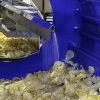
Filtercorp equipment
“Our filtration and treatment solutions work on the removal of very fine particulate removal around the 5 to 10um level and adsorption of non-oil components that lead to accelerated oil degradation. We would therefore typically put in a faster recirculation pre-filtration loop, at around 100 to 200um, and have this recirculating the complete fryer volume every 10 to 15 minutes, whilst taking a side stream off this through our fine filtration and treatment unit. This second filter loop would recirculate the complete fryer volume in about one hour. The main objective is to maintain a clean oil and remove fine particulate, whilst also treating the oil and removing soaps and metal ions which lead to accelerated degradation. If you were measuring FFA (Free Fatty Acids) as an oil quality indicator, you would see a much slower rise in FFA and balancing out at an acceptable level (this is all dependent on several other processing factors of course),” Filtercorp representatives add.
Preserving the Quality
Treating along and filtering cooking oil is the best way to not only preserve you cooking oil quality while simultaneously extending its life and greatly lowering production costs, according to Filosorb specialists. “Treating and filtering your oil will also give your finished products less fatty acid absorption, which in turn will provide less opportunity for rancidification the therefore extend your product’s shelf life. Investing in a filtration system comes with large expenses and it can be intimidating to companies which are currently not utilizing filtration systems and filter aids to acquire this large expense.

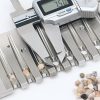
Filosorb sytem
Our company and our product line Filsorb are dedicated to providing customers extensive lab results that will allow us to predict over time how long it will take to see a return from oil cost savings, to pay off the investment of an oil filtration system, in most cases it isn’t as long as the customer may think. There is also a slew of soft cost savings or earning potentials that come when a company begins treating and filtering their cooking oil,” the specialists add.
The role of Frying Equipment
Oil quality and quantity can be both preserved for longer period of times and reduced, thus generating savings, if proficient frying equipment is installed in the plant. What frying equipment manufacturers try to do is to fine-tune the equipment and to take all necessary precautions in each step of the processing stages, in order to reduce acrylamide levels as much as possible.
“The formation of acrylamide occurs in the discharge end of the fryer, especially if the product is fried with a moisture content lower than 1% or if one over fries the potatoes. What we have done is we came up with a system where we can run the fryer discharge at a lower temperature than what one finds in the heat exchanger. It is called CATZ, which stand for Cold Adjustable Temperature Zone,” explains Goran Wadsten of Rosenqvists.

Rosenqvists equipment
Among the equipment available from the Swedish company, there is a performant chips fryer with a final capacity of 1800 kg/h, which includes the latest techniques in oil flow design, reduced total oil volume, optimized controls for easy temperature adjustments, specially designed discharge end with the CATZ system. Moreover, the company’s portfolio includes a complete double frying system for coated French fries, wedges, and other cut potato products. The system is designed for 8 t/h of coated and 10 t/h of normal French fries. The two separate fryers are equipped with full filtration systems: full flow drum filters, Lakos centrifugal filters and paper filters.
Making an Informed Choice
Companies I talked to for this article agree that there are definite opportunities to create savings, by both carefully choosing the oil filtration systems and the fryers and other equipment in the processing plant, that make use of oil. The more efficient all these are, the more oil can be saved or re-used.
“The future will not only be focused on oil consumption, but more on product quality levels and maintaining those levels. We will be working more on the removal of degradation components and contaminants like acrylamides. I believe there is still a long way to go with understanding the complex oil degradation process and meeting the future quality and legislation demands. We now have our own dedicated Frying oil Centre of Excellence where we carry out independent frying oil trials. This lab is equipped with side by side fryers and a full array of analytical equipment to measure the different oil degradation properties, filtration and treatment effects,” conclude the specialists from Filtercorp.