

Revamped Air Cleaner From Key Technology
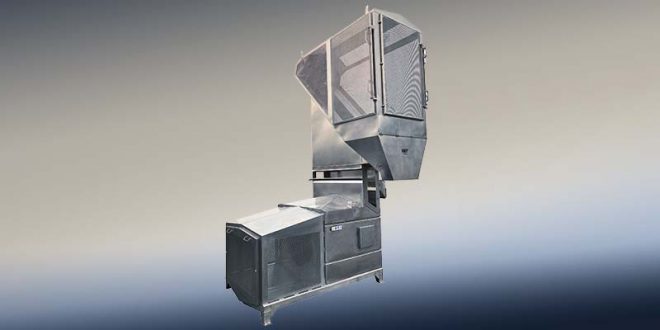
The #16 Air Cleaner from Key Technology was unveiled. This system cleans product of debris to enhance product quality and line effectiveness by removing dirt, extraneous vegetable matter (EVM), and other light materials.
The revamped air cleaner from Key has a new fan, motor, screen, and chamber structure that improves sanitation, lowers maintenance, and more evenly distributes air velocity across the product screen.
“At Key, we partner closely with customers to develop new solutions to their production problems. Our new air cleaner was driven by one customer’s desire to remove even more debris for a cleaner product. While we designed this system primarily to improve performance, we looked for opportunities to maximize sanitation and maintenance, too. Predictive modeling software was crucial in the development of this air cleaner. Computational fluid dynamics enabled us to model the airflow to create a revolutionary design backed by real data,” Jack Lee, President of Key Technology Americas said.
Key’s air cleaner eliminates dust, husks, leaves, and more. This device, which is generally installed at receiving, separates EVM and debris early in the production line to increase line efficiency and decrease energy waste.
Key’s air cleaner uses positive airflow to force light debris up and into a collection hood as it passes through the product as falls over a diagonal screen.
Key’s new air cleaner offers up to 538 cubic meters per minute (19,000 CFM) depending on the application, compared to the previous model’s maximum airflow capacity of 453 cubic meters per minute (16,000 CFM).
Additionally, the new air cleaner reliably removes more junk by distributing air velocity more evenly across the product screen. To more effectively meet processors’ product quality criteria, a smaller fan that uses the same 20 horsepower as the last model produces stronger, more equal air velocity.
With fewer worn parts, Key created the new air cleaner. To lower maintenance and operational costs, the new system simply has the motor as a moving part.
The removal of baffles, bigger access doors for simple cleaning, and sloped surfaces to help minimize product and moisture build-up have all enhanced sanitation. Piano hinges with numerous holes and laminations are replaced by modern hinges that have just one lamination.
Spot-welded screens are replaced with a new screen design that incorporates holes into the side panels. The rubber draw latches and wing nuts from the previous model have been replaced by the new fixed twist lock cam latches.