

Higher Stocks in the North-Western European Potato Growers Countries
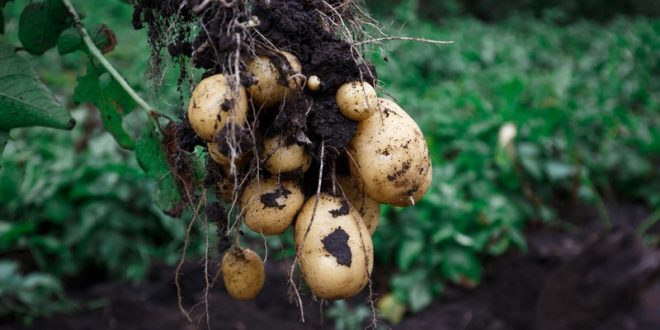
All recent surveys of stock levels in the NEPG (North-Western European Potato Growers) countries showed larger stocks of potatoes than last year or on average over several years.
According to a press release from NEPG, the yields were 11% higher in 2017, and that surfaces had increased by 6%. Currently, the potato stocks and the supply / demand imbalance have a negative impact on prices on the open market, despite the 15% rise in industrial demand over the last 5 years.
In December, NEPG estimated production losses at 5%, which now seems quite realistic or even underestimated in the scope of the NEPG, given the number of problems reported in storages. These problems often arise on the same varieties.
Even though the availability of potatoes is still sufficient to meet the demand of processors, they have recently returned to the market, which could have a positive impact on the market environment.
The overall quality is rather good in storage, however the destocking might be anticipated on certain buildings for qualitative reasons. The hypothesis of a lack of availability of lots with (very) good characteristics for frying at the end of the season is realistic.
The weather currently observed in Europe, with cold temperatures, could generate additional challenges. Early planting of early crops in some parts of Germany has already been delayed.
The industrial activity is still good, even if the potatoes are mainly contracted, leaving little possibilities for the trading on the free market.
Exports of potatoes for the fresh market are rather on a good dynamic, in a context of competitive raw material. In addition, product exports third countries continue to grow.
Given the current market environment, contract price decreasing for 2018/2019 is expected. The representatives of NEPG noted, in the most situations, price reductions of 5 to 10% depending on the delivery period, the variety, and the buyer. Thus, the contract prices are not only lower than those proposed during the previous harvest, but in some situations they even become lower than the 2 years ago prices. According to the NEPG, these contract prices are sometimes lower than production costs.