

Replacing the Potato Seed Winter Grow Out Process With a Dormant Tuber Test

Lisa Tran’s dissertation from the University of Idaho (U of I) has the potential to change how the organization that certifies seed potatoes operates in Idaho.
The Idaho Crop Improvement Association (ICIA) currently uses an elaborate winter grow-out in Hawaii to carry out post-harvest testing. Grower-submitted tuber samples from seed potato lots submitted for certification are planted there, and each plant’s leaf is harvested and sent back to Idaho Falls for laboratory analysis.
Tran is looking at the viability of switching the Grow Out procedure to a dormant tuber test, which would be carried out in the Idaho Falls facility of ICIA. Direct tuber testing would give results to growers months sooner, assisting them in making timely decisions about markets for their seed lots. It would also prevent the program from doing the yearly post-harvest test overseas, which has its difficulties.
“If I can achieve what the industry has been expressing an interest in, it’s going to be a big change for the certification agencies if they decide to move in this direction – almost like entering a new era,” Tran said.
To check seed potato lots for potato leafroll virus (PLRV) and potato virus Y (PVY), evaluate chemical damage, and establish variety identity and purity, ICIA employs the Winter Grow Out. With a few minor exceptions, lots that contain more diseased seed than specified limits are not eligible for re-certification and growers cannot replant them to increase their seed supply.
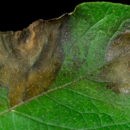
Crop experts in Hawaii visually inspect test plots for PLRV symptoms and transmit leaves from symptomatic plants to Tran and her team for confirmatory testing. Due to PVY’s asymptomatic or moderate expression in some potato varieties, they additionally send a leaf sample from each plant to Idaho Falls for testing. Enzyme-linked immunosorbent assay testing (ELISA) is used by Tran’s team to check for both pathogens.
Tubers have lower viral concentrations than leaves, and direct tuber testing with ELISA is insufficient to accurately identify low PVY levels. Additionally, ELISA has the drawback of not being able to test for many infections at once.
Quantitative polymerase chain reaction (qPCR), a more sensitive laboratory test that may simultaneously screen for several diseases, is being evaluated by Tran. She has discovered that direct tuber testing using qPCR yields results for PVY and PLRV detection that are comparable to those of the existing Winter Grow Out technique utilizing ELISA testing.
Although qPCR testing is often more expensive than ELISA testing, the laboratory already uses qPCR for detecting other infections. Tran’s research will also include figuring out how to modify lab procedures to overcome challenges related to seed certification. For instance, the program presently evaluates up to 900 seed lots annually, with the majority of seed lots supplying 400 tuber samples for the Winter Grow Out. This represents a staggering volume of samples that must be processed quickly. If it shifts to direct tuber testing, the employees would have to switch from handling and testing 400 leaves to 400 tubers, which is a completely new processing approach.
“The technology is there but whether it can be adapted to the larger scale we’re working on is up for debate,” Tran said.
Tran will take the lead in making the reforms in Idaho if the industry ultimately decides to change testing procedures. Tran manages the Idaho Falls ICIA seed certification laboratory in addition to being a graduate student.
“I feel who better to do this research than the position I’m in as ICIA lab manager because I know every single detail that goes into the winter testing,” Tran said. “Starting this Ph.D. project allows me to have one foot on the research side and the other foot on the certification side, allowing me to tailor protocols to ICIA’s infrastructure and needs.”
Tran started the project in the summer of 2022 with funding from USDA’s National Institute of Food and Agriculture and a USDA Specialty Crop Block Grant administered by the Idaho State Department of Agriculture.
Tran’s major advisor is Alexander Karasev, a University Distinguished Professor of Virology.
“Growers need to know right away which lot is clean and which one is not clean. You need to understand the economics as soon as possible,” said Karasev, who was also her master’s advisor when she studied detection methodology for two other viruses affecting potatoes – potato mop-top virus and tobacco rattle virus.
Tran recently received USD1,100 through the Joe and Terri Guenthner Graduate Scholarship, an endowment established to honor the career of Joe Guenthner, a 33-year veteran of the University of Illinois Extension and current professor emeritus, in recognition of her work to advance the potato industry. Graduate students enrolled full-time in the College of Agriculture and Life Sciences who want to work in the potato sector are eligible for the award.
Under award number 2020-51181-32136, a USD5.8m USDA-NIFA-SCRI grant has provided financing for Tran’s project. Additionally, USD130,000 in USDA-SCBG money through ISDA was given to the project, “Development and Adoption of Direct Tuber Testing to Enhance Marketing Potential of Idaho Seed Potato,” in 2021.