

Following Sustainable Business Standards in Potato Processing
One of this generation’s most important goals is to reduce food waste. Processors, retailers, and consumers are increasingly concerned about food origins and demand producers follow sustainable business standards.
Sustainability is a key challenge for the food industry and processors globally are recognizing their part in safeguarding the future. As the world’s population continues to grow, so does the demand for food products.
Another major challenge for sustainability is the usage of energy in manufacturing and the corresponding greenhouse gas emissions. Businesses can run for less time to obtain the same output by boosting the yield from every raw material entering the production process, conserving energy and water.
Greater production volume results in increased pollution and waste, and many processors are now actively engaged in sustainability reporting. Global Reporting Standards (GRS) are assisting processors in assessing (and defining) their sustainability initiatives, allowing them to better control and comprehend their impact.
To satisfy their sustainability goals, processors are investing heavily in equipment that reduces fuel costs, energy waste, air pollution, and water usage while also meeting the stringent pollution control rules of global agencies.
While contemporary processing equipment must handle all aspects of sustainability, it must also enhance efficiency and profitability if it is to be extensively adopted in the future.
As interest in sustainable technology rises, turnkey providers are supporting processors in planning their future plants and in adopting or upgrading their existing equipment to process more ethically.
There are already numerous technologies available that can minimize fuel expenses, energy waste, air pollution, and water use. Working with a turnkey provider is an excellent method for a processor to gain knowledge in sustainable potato processing while also learning about new and upcoming technology.
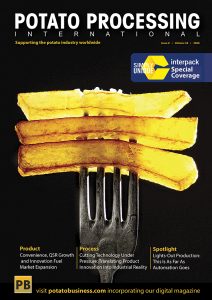
You can read the rest of this article in your complimentary e-copy of Issue 1 of Potato Business Digital 2023 magazine, which you can access by clicking here.