

Acrylamide Reduction: Manufacturers Are Under Increased Pressure
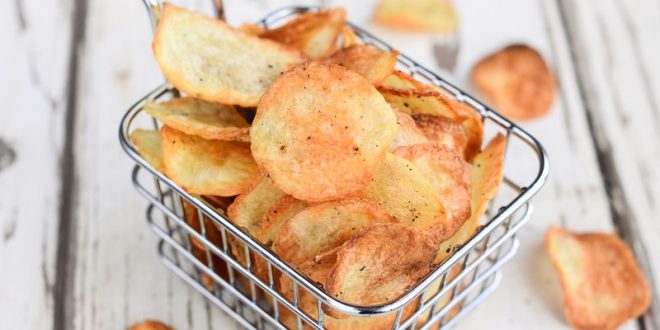
We all love a bag of chips. And while there are more and more baked varieties available, nothing beats a thinly sliced, crispy piece of fried potato! However, with the EU’s new regulation on the reduction of acrylamide now in force, manufacturers are under increased pressure to reduce the effects of the Maillard reaction that naturally occurs between amino acid and reducing sugars when starchy foods like potatoes are fried at high temperatures. At the same time, consumer demand for healthier snacks that taste great and have a desirable color and texture is further adding pressure on manufacturers to find new processing solutions. As a result, there has been an increased level of innovation and new product development (NPD) across the food processing industry to address these demands and provide multiple benefits to consumers.
What is acrylamide?
Acrylamide is a chemical that can be formed in food via the reaction of asparagine (an amino acid) and reducing sugars (particularly glucose and fructose) at temperatures higher than 120 degrees Celsius during frying, baking, roasting, toasting and grilling. The amount of acrylamide formed depends on the final frying temperature, moisture content, cooking time and amount of asparagine and reducing sugars in the product. Potatoes and other root vegetables including sweet potatoes, beets and yams, for example, naturally contain both macronutrients. This means the formation of acrylamide is more common in chips produced using these types of raw materials. Other major contributing food groups include French fries, coffee, biscuits, pastries and bread.
Due to the health concerns associated with acrylamide, leading bodies such as the WHO and the Food and Agriculture Organization (FAO) of the United Nations are paving the way to determine the risk of dietary acrylamide exposure, stating the levels of acrylamide in foods pose a ‘major concern’. [Food and Agriculture Organization of the United Nations. World Health Organization. Summary report of the sixty-fourth meeting of the Joint FAO/WHO Expert Committee on Food Additives (JECFA).]
Subsequently, major international efforts have been mounted to investigate the principal sources of dietary exposure, assess the associated health risks and develop preventative measures to reduce acrylamide levels, particularly in processed foods. In Europe new legislation which limits the amount of acrylamide in some type of foods came into force in April last year. The new EU regulation introduced new benchmark values for a wide range of products, including potato chips and French Fries, forcing manufacturers to closely examine and reduce acrylamide levels in their products.
The rise of innovative processing techniques
There is a wide variety of technology available that allows manufacturers to successfully reduce the levels of acrylamide without the need to re-formulate their products. These include pre-processing techniques, such as pulsed electric field (PEF) technology, as well as innovative frying equipment, including multi-stage, vacuum and batch frying.
- PEF technology
PEF technology is a relatively recent development which does not rely on heat treatment. The technology works by using pulses of electricity to puncture cell membranes and allow fluid to exit. As a result, sugar and moisture are removed. This enhanced sugar extraction results in reduced acrylamide formation during cooking, while also allowing the use of all potato varieties, including those with high sugar levels / late season potatoes. Chips manufacturers are therefore able to decrease raw material costs while increasing product quality, as well as profitability. As a non-thermal processing technology, the product also remains raw throughout, maintaining the product’s structure for improved texture and crispiness. At the same time, PEF treatment also improves cutting, thanks to a smoother surface, offering manufacturers the possibility to develop new cuts and shapes (e.g. thin lattice cuts). While this helps to create a crispier product, it also facilitates diverse ranges of healthier snacks, helping their products stand out on the supermarket shelves.
- Continuous frying (with a twist)
Continuous, atmospheric fryers that are equipped with special oil flow control technology allow manufacturers to accurately control the dwell time of the chips in the hot oil to ensure that each chip is fried evenly and to perfection. For example, an innovative oil inlet section, such as our patented opti-flow® technology, can produce a more streamlined laminar oil flow over the full width and length of the fryer pan. It therefore effectively minimizes the occurrence of turbulence by removing 99% of cyclone dead spots at the beginning of the fryer. This prevents debris from settling and ensures that potato slices don’t absorb or carry any excess oil. As a result, each potato chip is evenly fried, lowering the level of acrylamide and reducing the number of rejects for enhanced product quality and increased yield.
- Vacuum frying
Vacuum fryers continuously cook products under low temperature and low-pressure conditions, from start to finish. This makes them ideal for producing chips from fruit and vegetables that are high in natural sugars, such as parsnips, beets, carrots, apples, kiwifruit or mango, since temperature-related reactions, such as acrylamide formation, are slowed down significantly and in some cases do not occur. This is a particularly important development for potato and root chip manufacturers, since no matter what the reducing sugar level of the raw material, high quality end products are achievable. Potatoes containing 0.3 per cent or more sugar for example, are often considered low quality. However, with vacuum frying technology, the same quality end product can be achieved as using products with lower sugar content. In addition, the use of high-quality oil varieties is also possible. Oil oxidation is reduced due to lower frying temperatures and lack of oxygen present in the system, leading to a much longer shelf life and cost savings.
- Multi-stage frying
Multi-stage frying (also referred to as two-stage frying) is a tailor-made approach, which is broken down into two stages, the first of which is atmospheric pre-frying and the second, vacuum frying. During the initial stage, the product is fried at a high temperature to remove about 80% of the moisture. The process is then completed at a lower temperature (approximately 120-130°C) in a vacuum fryer. At this low temperature, acrylamide formation is very slow, almost unable to form, ensuring a safer and healthier end product.
- Batch frying
Batch frying is an additional technology which is currently being explored to produce healthier snack products, as manufacturers look to optimize the atmospheric batch frying process – in particular when experimenting with fruit and vegetables containing high levels of starch and/or reducing sugars, such as beets, plantain, banana, cassava, or sweet potato. In comparison to continuous frying processes where products are cooked at high temperatures for a short amount of time, batch frying involves cooking at 140°C for a longer length of time. At these lower temperatures, acrylamide formation is reduced, creating safer fruit and vegetable chips.
Conclusion
There is no doubt frying will remain a popular cooking method around the world. However, new regulations and the demand for healthier snack products has re-shaped the way manufacturers process food. From experimenting with new ingredients to ground-breaking processing technologies, innovation is extensive. With so many options available for creating healthier products, it is important to work with a supplier that has the necessary technical innovations and knows how to find the right solutions for individual production requirements. By opting for innovative processing technology from tna, manufacturers will be able to meet new regulations without jeopardizing consumer acceptance of their products.
Arnaud Jansse is food technologist at tna